Showing posts with label Xylaria hypoxylon. Show all posts

Tuesday, January 10, 2023

Some winter fungi

 Not many big fungi around in my neck of the woods at this time of year, but plenty of interesting smaller ones.


This is yellow brain fungus Tremella mesenterica, a parasite on another fungus called Peniophora that grows on dead gorse stems.


I first saw crimp gills Plicaturopsis crispa (upper and lower-side views above) near Durham city ten years ago (original post here), and since then they have become very common, growing on fallen dead birch and hazel branches




Candle snuff Xylaria hypoxylon is very common on dead wood.


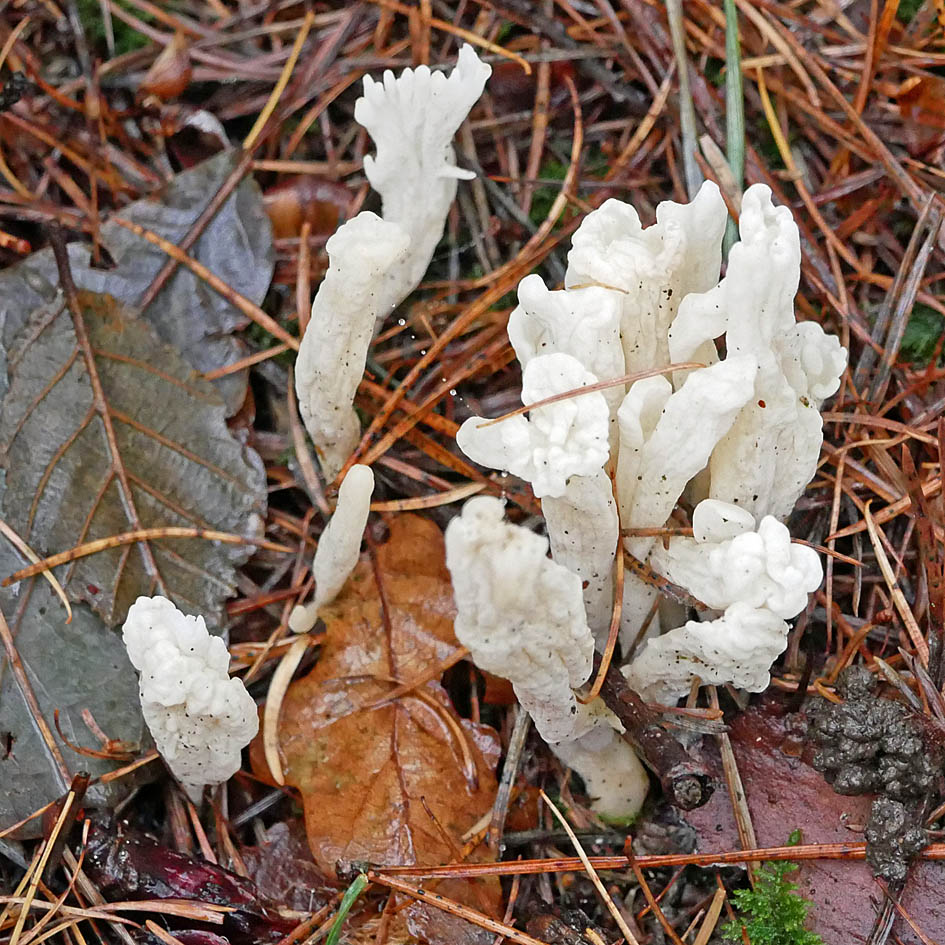
These are ivory coral Ramariopsis kunzei, growing in a local Scots pine plantation


Exquisite variable oysterling Crepidotus variabilis, on a dead twig.


Coral spot Nectria cinnabarina exists in two forms. The orange pustules are the asexual stage, producing conidiospores. Eventually, they give way to the cinnabar-coloured sexually reproducing form, that introduces genetic variability into the population. 

Friday, November 23, 2012

Dead Assets


With all the doom and gloom about dying ash trees in the news, maybe it's as well to bear in mind the wise words of Oliver Rackham - probably Britain's foremost authority on trees and woodlands - who observed that "a huge dead tree is still beautiful, and as good a habitat as a living tree". When a tree dies a whole host of organisms colonise and feed on it throughout its afterlife, which can last for decades. The National Trust owns two woodlands on the south bank of the River Swale at Richmond in North Yorkshire - Billy Bank wood and Hudswell wood - and has taken great care to ensure that there's a plentiful supply of dead wood lying around to act as a habitat for organisms that depend on this habitat.


This massive fallen beech is covered by a carpet of moss on its upper surface while ...


.. the underside hosts numerous fine young examples of Ganoderma fungus. This bracket fungus can live on the dead wood for a decade or more, producing a new layer of white sporing tissue on its underside every year.


I think this is probably a sycamore stump, hosting one of the densest populations of candlesnuff fungus Xylaria hypoxylon that I've ever seen.


There are also some decaying hazels that must once have been coppiced. Their decaying poles are the favourite substrate for hairy curtain crust fungus Stereum hirsutum. This is a young specimen ....


.... and here's a more mature example.