Today's Guardian Country Diary is all about the contents of our garden kitchen waste compost bins.
We have been recycling all of the vegetable waste from the kitchen, together with garden weeds and fallen leaves, for about 30 years now, using three black compost bins. During that time we must have produced tons of compost that has all been dug back into the garden, which is now a very fertile plot.
These are some of the organisms that do all the recycling work.

The first organisms to colonise the vegetable peelings and fruit skins are fungi. I suspect that this might be a Penicillium mould, which often grows on the skins of rotting citrus fruits.

This is the rather lovely pin mould, Mucor mucedo, with glassy hyphae and sporangia that look like beads of polished jet.

This, I suspect, is Botrytis, a common coloniser of dead vegetable matter.

Currently there are thousands of these tiny moth-flies (also known as drain-flies or owl-midges) in one of the bins.


They breed in vast numbers during the early stages of composting, when the bins are less than half full....

.... and provide a food source for some of the predators that live in the bins, like this small spider that has an egg cocoon under the bin lid.

The bins are home to a lot of slugs, that consume decaying plant material and are useful all the time they stick to this diet, though in spring they become a nuisance if they consume seedlings in the garden.
To minimise that risk I raise plants in posts until they are large enough to show some degree of slug resistance when I plant them out in the garden.

A black snake millipedes, that feeds on the decaying plant material and probably on some of the fungi too.

As the composting proceeds and the bin contents become drier the numbers of these minute springtails increase. When you lift the lids they pole-vault into the air, using the special structure called a furcula under their tail end.

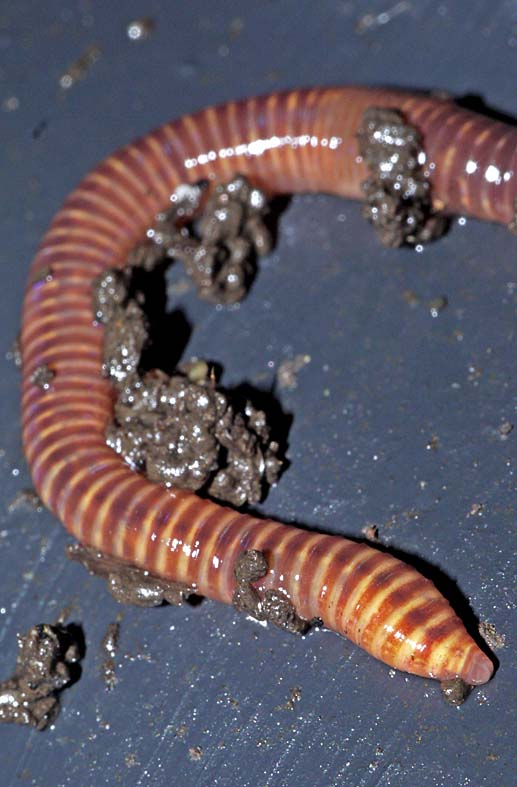
And finally ...... the most important recyclers of all, brandling worms Eisenia fetida. When composting is at its peak there are hundreds of these in each bin.

Much of the compost that ends up in the garden has probably passed through the digestive system of one of these worms.






 Posts
Posts


