Showing posts with label common blue butterfly. Show all posts

Saturday, July 20, 2013

A Butterfly Bank: third visit


It's almost three weeks since we last visited the sunny magnesian limestone railway embankment on the disused railway line between Garmondsway and Trimdon, and during that time the withering heatwave has had a major impact on the flora. Most of the species that were in their prime then are coming to the end of flowering and are run to seed, but new flowers have appeared in their place.


The most notable newcomers are fragrant orchids, which are now present in large numbers. Fragrance is rare in orchids - they tend to rely on elaborate floral architecture and colour to attract pollinators - but this species has a powerful, sweet scent. It's individual flowers have a long spur filled with nectar that's only easily accessible to the long tongues of moths and butterflies - and on this visit there were plenty of butterflies along the bank, including .....


..... common blues ....


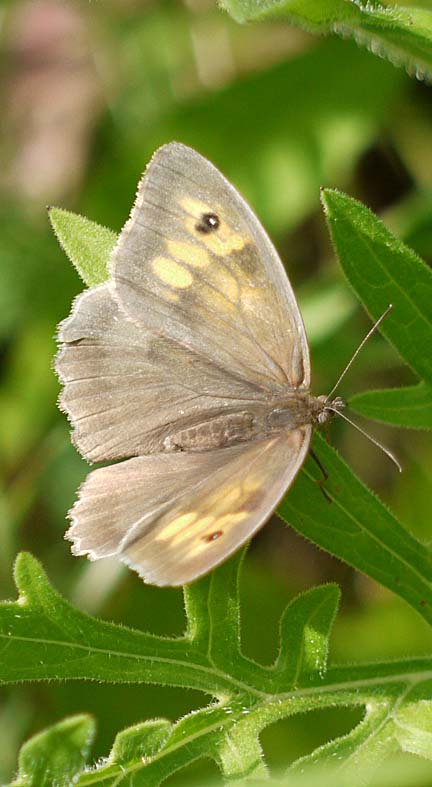
...... meadow browns, in very large numbers in glades along wooded parts of the old railway line


...... ringlets .....


...... small heaths.....


..... large skippers ....


... and a very fresh-looking small tortoiseshell that must have emerged recently, sunbathing on a limestone ledge, and .........


.......... in glades along the wooded parts of the old railway line, speckled woods. These two are courting - notice how the male is touching the underside of the female's wings with his antenna, perhaps detecting scent scales there (?). The courtship didn't last long because another male arrived and .........


....... a furious butterfly dogfight ensued, during which the female lost interest and flew away.

The newspapers and conservation organisations are quite rightly hailing this as a wonderful year for butterflies, during which their numbers have rebounded, but this seems to overlook the fact that most of those that are on the wing in early summer have actually hatched from eggs that were laid during last year's disastrous summer and have survived the longest, coldest winter in living memory as hibernating caterpillars, pupae or, in some cases adults. That surely says something about the resilience of butterflies to the annual vagaries of our weather and suggests that we need to be far more concerned about protecting habitats, like this wonderful butterfly bank, than the effects of annual weather extremes (not to be confused with long-term climate change, though) 


Thursday, August 4, 2011

Teesdale


Today's Guardian Country Diary describes a walk from Forest-in-Teesdale to Winch Bridge near Bowlees, along a popular stretch of the Pennine Way on the south bank of the river Tees. The 'forest' in question is the location of the juniper forest that covers much of the fellside south of High Force waterfall. It's full of wonderfully gnarled, wind-pruned trees that have a fragrance of gin if you crush their foliage between finger and thrumb.


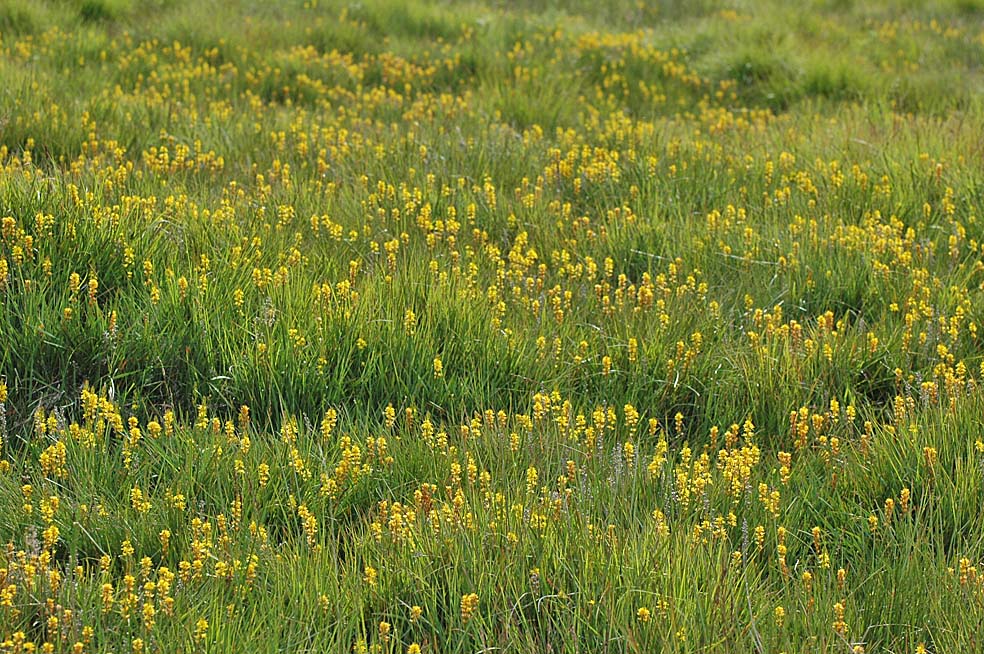
A little further down the hill there's a sweeter kind of fragrance, when you come to the Sphagnum bog, which I guess covers about an acre - and last week was full of scented bog asphodels at the peak of flowering.
 Vast numbers of these flowers were in bloom - a better display than I have ever seen before. Teesdale is rightly famous for its rare spring gentians, but in summer the asphodels are a stunning spectacle too.


The Latin name for the plant is Narthecium ossifragum, alluding to the fact that animals were once believed to develop brittle bones if they grazed on this plant - ossifragum means 'bone breaking'. The low calcium levels in these boggy soils are a far more likely cause of any skeletal problems in grazing animals.


Further down the path the meadows beside the river are full of greater burnet .....


.... and meadowsweet, while on the rocky islands in the river ...


... the rather rare shrubby cinquefoil is in bloom ....


.... with its egg yolk-yellow flowers. In winter, when the river rises (especially after rapid snow-melt up on the fells) these shrubs are completely submerged but their roots penetrate deep into the fissures in the rocks, anchoring them in the current.


Some of the best floral displays are in the pastures near Winch bridge, full of betony ....


... and devil's bit scabious (click for a larger image, to see this more clearly).


All of these flowers are a major attraction for butterflies, like this newly-minted female common blue.


The appearance of these fine Boletus toadstools were a reminder that autumn is on the horizon.

The continuity of the wonderful flora in the pastures along this stretch of Teesdale really depends on carefully managed grazing, and the quote from a  farmer inscribed under Keith Alexander's scultures describes what would happen if the grazing stopped: "It reverts to scrub. When it's gone, it's lost".

Tuesday, August 2, 2011

Smardale Gill

Smardale Gill NNR in Cumbria is one of my favourite reserves, not just for the reserve itself but also for the walk to it. There are two usual ways in, either across country from Ravenstonedale, or via the narrow roads just south of Kirkby Stephen railway station. This time we took the latter route, along a single track road that's fringed with wild flowers, including this two foot-tall harebell which I think is the tallest I've ever seen.


 From this direction the footpath into the reserve follows the bed of a disused railway track through woodland and where the canopy opens out it forms a linear woodland glade that stretches for over a mile, fringed with flowers like this wild angelica.

The ripening stone brambles Rubus saxatilis were a reminder that summer is moving on.


Stone bramble berries look wet even when it's not raining.

A good crop of hazel nuts too.

The woodland glade footpath is also a great place to watch spotted flycatchers

Eventually the footpath opens out at the right-hand end of this fine old railway viaduct across Scandal Beck

At this point you can turn left off the footpath and walk through limestone grassland on the east side of the valley ...


.... the footpath you can see on the left here takes you all the way down to Ravenstonedale, below that big hill in the distant Howgills.

Alternatively you can walk across the viaduct, taking in the view to the north across the treetops of Smardale Gill wood (accessible only with a permit from the Cumbrian Wildlife Trust)

The footpath on the far side of the viaduct continues through some of the finest flowery limestone grassland imaginable, past these impressive old lime kilns...

There is a stark contrast between the plant species diversity along the old railway line and in the improved sheep pasture that you can see in the middle distance here, where very few plant species survive. The railway industry, by fencing off the limestone grassland, effectively saved it from a similar fate and the wonderful floral diversity along this part of the line owes its survival to the Victorian railway company that bought the land and built the lines.

Here's an example - a wonderful patch of betony, greater burnet and bedstraw (double-click for a bigger image).

The most impressive flowers, though, are the fragrant orchids - literally hundreds of them. The scent was intoxicating at mid-day - it must be amazing as dusk, when the fragrance is stronger.


This is Jacob's ladder Polemonium caeruleum - unlikely to be native here and almost certainly a garden escape, but lovely nevertheless
The far side of the valley looks like plain grassland from a distance, until you walk through it ...


... and find that it's full of limestone-loving wild flowers like this harebell, which makes it an idyllic spot for a picnic.

Field scabious .....

... and rock-rose

A spider had woven a coccoon into this flowering head of quaking grass.

This part of the reserve is probably best known for its butterflies, like these mating common blues ...

... and the much rarer Scotch argus, with its chocolate-brown and orange colour scheme. On a sunny day they are very active, so it's hot work photographing them...

... but this one, possibly newly emerged, was more accommodating.

Green fritillaries are the other notable breeding butterflies here and usually the best place to photograph them is on thistles, when they feed, but this one was indulging in some sunbathing.