Showing posts with label Pseudoscleropodium purum. Show all posts

Tuesday, February 10, 2015

Meadow ant metropolis

The undisturbed grassland in glades in the hawthorn scrub in Auckland Castle Park, at Bishop Auckland in Co. Durham, is home to an astonishing collection of meadow ant nests. There must be about 200 of these domed nests on the sunny south facing slope, with many more scattered throughout the park.


At the time of writing they are dormant but at the peak of activity in summer each is home to tens of thousands of ants and - like icebergs - there is more of the colony below ground than above.
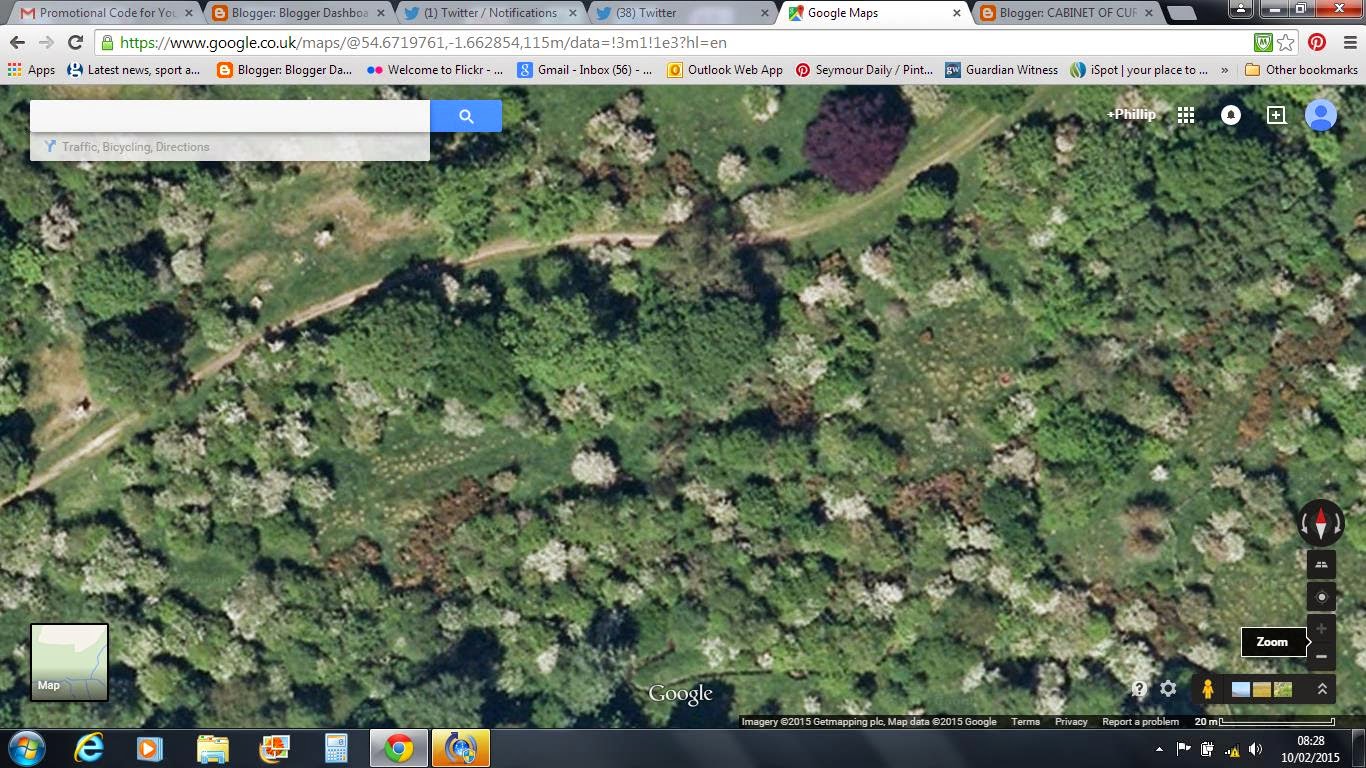


There are so many that they are easily visible in satellite imagery. This is a screen grab from Google Earth. Double click on the image to enlarge it, then look for the two groups of pale dots across the centre of the image, just south of the footpath that snakes across the map.


This enormous concentration of ant nests makes it a perfect feeding site for green woodpeckers, which are ant-feeding specialists. I can't think of a single time when we've visited when I haven't seen or heard one (though I've yet to get a decent photograph!).


One curious feature of the ant metropolis is that every nest is capped in winter with a single species of moss - neat feather moss Pseudoscleropodium purum


When the grasses die down in winter the vibrant green moss has a chance to thrive in its place in the sun, surrounded by dead grass.


There's plenty of moisture for most of the winter months but the moss's enduring success in this habitat, which can at times be very dry in such a sunny, south facing site, may be due to the arrangement of the moss leaves.


The leaves are arranged like a spiral whorl of overlapping cupped hands around the long axis and the 'cups' hold water


You can see the effect here - when the moss is moist it has this very shiny, inflated appearance. Under the microscope you can actually see water trapped under the leaves,


Monday, January 24, 2011

Small, but Beautifully Formed...

If you are a botanist, mid-winter can be a bit of a lean time of the year unless you turn your attention to some of the smaller members of the plant kingdom - like mosses, for example. They're evergreen and many species make a lot of growth during milder periods in winter. Indeed, for species that live in woodland or amongst grass winter is their window of opportunity, when there's plenty of light available, before they are shaded by a woodland canopy or lush grassland sward. Add to that the fact that many mosses switch into reproductive mode in autumn and winter and produce their spore capsules, and that there are an awful lot of species out there, and you soon find that these diminutive plants have their own particular fascination. The example above, producing a forest of spore capsules, is Dicranoweisia cirrata or, more prosaically, common pincushion moss - a species with a liking for colonising the tops of old fence posts.
  
This is one of the commonest of all mosses, Hypnum cupressiforme or cypress-leaved plait moss. This picture is a bit small but if you double-click on it (and all the others, for that matter) the resemblance to the scaly leaves of a cypress tree is evident and the leaves do look as though they've been plaited, although .....

... if you look at the shoots sideways-on another distinguishing feature is revealed - the way in which all the leaves curve in the same direction on the underside of the shoots.

There are several varieties of Hypnum cupressiforme that are given their own specific names by dedicated bryologists (botanists who study mosses). This is probably the most typical version though, which produces a forest of tan-coloured spore capsules at this time of year. Sometimes you'll find whole fallen tree trunks covered with a silky mat of this moss.

This species, which grows in short grass, often on bank tops, is Pseudoscleropodium purum (say it slowly and savour the name, it has a nice alliterative sound to it, even if you have an aversion to Latin names). Its common name is neat feather moss and it's distinctive feature is the way its neat, cusp-shaped leaves overlap one another, giving the shoots this stout, swollen look.

And finally, another moss growing here on top of a grassy bank - the splendid Hylocomium splendens, also known as glittering wood-moss, with its magnificent red stems.

So that's four species - now I need to learn to identify the remaining 759 species....

For more on mosses, click here...

... and for a review of an interesting-sounding book on mosses (which I haven't read yet), take a look at Lesley's Blooms and Beasties Blog...