Low Burnhall is a Woodland Trust reserve just south of Durham city, with new tree planting to link up fragments of ancient woodland. It will take a while to produce a continuous woodland canopy but in the meantime the existing woodland and large areas of open grassland are home to a wide range of interesting insects species.
Our best find on this visit was this handsome wasp beetle, Clytus arietis, an amazing example of mimicry. It not only looks like a wasp, it moves like a wasp too, with the same jerky walk. No sting, perfectly harmless. Breeds in decaying wood - we found it close to the rotting fallen branches of an old willow.
Our visit coincided with the hatching of scores of five-spot burnet moths.
Unhatched .....
..... and hatched five-spot burnet cocoons
Newly emerged five-spot burnets mating
Possibly the shortest courtship ever - these two five-spot burnets emerged simultaneously from the upper and lower cocoon and mated immediately
There were plenty of newly-emerged ringlet butterflies around. They even fly in light rain.
A very unlucky large skipper, caught by a spider. Maybe the two froghoppers will be luckier when they emerge from their cuckoo spit.
The caterpillar of the Timothy tortrix moth Aphelia paleana, which feeds on a wide range of plants including docks and plantains, as well as Timothy grass. Thanks to Colin Duke for identifying this for me, via the excellent iSpot web site
A capsid bug - I think this is the cock'sfoot bug Leptopterna dolobrata
A sawfly, which I think is a Tenthredo species , feeding on buttercup nectar
Forest shieldbug, Pentatoma rufipes, on an oak leaf.
Kentish snail Monacha cantiana, found inside a curled-up hogweed leaf. Thanks to Martyn John Bishop and Steve Gregory for identifying this for me, also via the excellent iSpot web site
Showing posts with label capsid bug. Show all posts
Friday, June 27, 2014
Monday, June 9, 2014
Exploring the undergrowth
I spent a couple of hours last week, on a warm, humid afternoon, exploring the undergrowth at Deepdale Nature Reserve in Barnard Castle. The boggy ground on either side of the footpath was overgrown with butterburr leaves, meadowsweet, vetches, red campion and docks and was seething with insects and spiders. These are a few that I managed to capture on camera.
Earwig - for more about earwigs click here
Female scorpionfly
Male scorpionfly - for more about scorpionflies click here
The beautifully iridescent green dock leaf beetle - for more about this species click here
A sawfly that I haven't managed to ID for sure yet - for more sawflies click here
A spider, Tetragnatha extensa, with a golden abdomen. For more spiders click here.
A very bug-eyed mayfly - possibly Ephemera danica. For more on mayflies click here.
A common green capsid bug Lygocoris pabulinus - for more on capsid bugs click here
A staphylinid beetle stretching its wings....
..... curling up its tail in characteristic defensive mode ....
..... and with its wings packed away, showing the extremely short wing cases. For more staphylinid beetles click here
Friday, July 19, 2013
The best time of the day in the garden ...
During this heatwave, the best time of the day to be in our garden is between 6am., when the sun creeps over the hedge, and 8am. when the day really begins to heat up.
The first shafts of sunlight spotlight the tallest plants, like this dill ......
..... or illuminate individual flowers like this meadow cranesbill.
Some insects, like these Solomon's seal sawfly larvae that defoliate our Solomon's seal plants at this time every year, probably feed during the night and retreat under what's left of the leaves during the hottest part of the day.
This solitary bee, which I haven't identified yet but might be a Nomada species, has taken up residence in one of the hogweed stem tubes in the 'bee hotel' that we made over the winter, and emerged as soon as the sun shone into its residence.
Even at 6am. it's warm enough for bumblebees to be very active ....
....... and as soon as the sun spotlights the tall monkshood flower spikes they attract a lot of attention from bumblebees.
Other bumblebees seem to specialise in collecting pollen from newly-opened opium poppies. Their technique is to crawl under the ring of stamens, buzz and work their way around between the stamens and the petals, showering themselves in pollen that they later comb off into their pollen baskets. By 7am. this bee's pollen baskets were already full.
This tree bumblebee adopted a different technique, visiting Lavatera flowers that wilted and closed yesterday and extracting the remaining nectar by forcing its long tongue down between the base of the petals and the sepals.
Some insects, like this drone fly that mimics a bumblebee, perch on the lavender flower spikes just to bask in the sun ...
... while this common carder bumblebee was busy collecting nectar from the same plant.
Other early morning insects today included a green capsid bug which I think might be Lygocoris pabulinus, feeding inside a marigold ...
...... an anxious-looking froghopper, newly emerged from its 'cuckoo spit' cocoon of bubbles ........
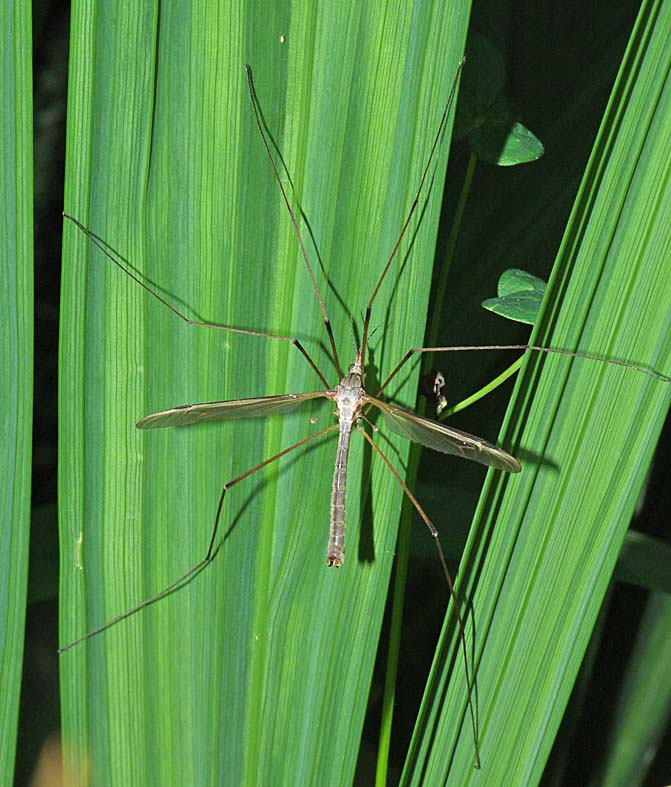
.............. and a crane-fly that will probably soon end up in one of the many spiders' webs that are beginning to appear around the garden...
Subscribe to:
Posts (Atom)