Showing posts with label owl midge. Show all posts

Thursday, March 2, 2017

Biodiversity in a kitchen waste recycling bin


Today's Guardian Country Diary is all about the contents of our garden kitchen waste compost bins.

We have been recycling all of the vegetable waste from the kitchen, together with garden weeds and fallen leaves, for about 30 years now, using three black compost bins. During that time we must have produced tons of compost that has all been dug back into the garden, which is now a very fertile plot.

These are some of the organisms that do all the recycling work.


The first organisms to colonise the vegetable peelings and fruit skins are fungi. I suspect that this might be a Penicillium mould, which often grows on the skins of rotting citrus fruits.


This is the rather lovely pin mould, Mucor mucedo, with glassy hyphae and sporangia that look like beads of polished jet.


This, I suspect, is Botrytis, a common coloniser of dead vegetable matter.


Currently there are thousands of these tiny moth-flies (also known as drain-flies or owl-midges) in one of the bins.


They breed in vast numbers during the early stages of composting, when the bins are less than half full....


.... and provide a food source for some of the predators that live in the bins, like this small spider that has an egg cocoon under the bin lid.


The bins are home to a lot of slugs, that consume decaying plant material and are useful all the time they stick to this diet, though in spring they become a nuisance if they consume seedlings in the garden. 

To minimise that risk I raise plants in posts until they are large enough to show some degree of slug resistance when I plant them out in the garden.


A black snake millipedes, that feeds on the decaying plant material and probably on some of the fungi too.


As the composting proceeds and the bin contents become drier the numbers of these minute springtails increase. When you lift the lids they pole-vault into the air, using the special structure called a furcula under their tail end.


And finally ...... the most important recyclers of all, brandling worms Eisenia fetida. When composting is at its peak there are hundreds of these in each bin. 


Much of the compost that ends up in the garden has probably passed through the digestive system of one of these worms.


Wednesday, January 8, 2014

Insects in mid-winter


Still pretty mild for January - mild enough for these insects to be active:


Small.........


An unidentified fly feeding on winter flowering sweet box (Sarcococca confusa) this afternoon, carrying a lot of pollen on its hairy body. The books say that sweet box is highly scented - but not to me, I can't smell it. Maybe it's similar to the ability to smell Freesias - some can, some can't. Sweet box certainly attracts flies, though.

Smaller..........


Owl midges, about 3mm. long, on the surface of rainwater in a bucket in the garden. They are breeding in vast numbers in the compost bin during this mild weather - every time I open the lid swarms fly out and are fatally attracted to the water. For more on owl midges click here and here and here .

Smallest..................


A booklouse (psocid), less than 2mm. long, living in a bag of walnuts (imported from France) that we stored in our conservatory. For more about this unusual but very common little insect click here 

Thursday, October 3, 2013

Owl midges

With the days shortening and the lights going on earlier every evening, many more nocturnal insects are attracted to lit windows. This tiny, delta-winged owl midge (aka moth fly) peered at us through our kitchen window last night.


Aside from their unusual delta-winged shape and overall hairiness, owl midges are peculiar amongst flies in having long, uninterrupted wing veins with no cross veins.


For a more detailed description of these very common insects, click here


Monday, September 9, 2013

I made my excuses and left ........

The compost bin at the bottom of our garden recycles all our vegetable-based kitchen waste and every time I lift the lid it reveals a new population of animals, most of them small ........


.... like this hairy little owl midge, about three millimetres long. 


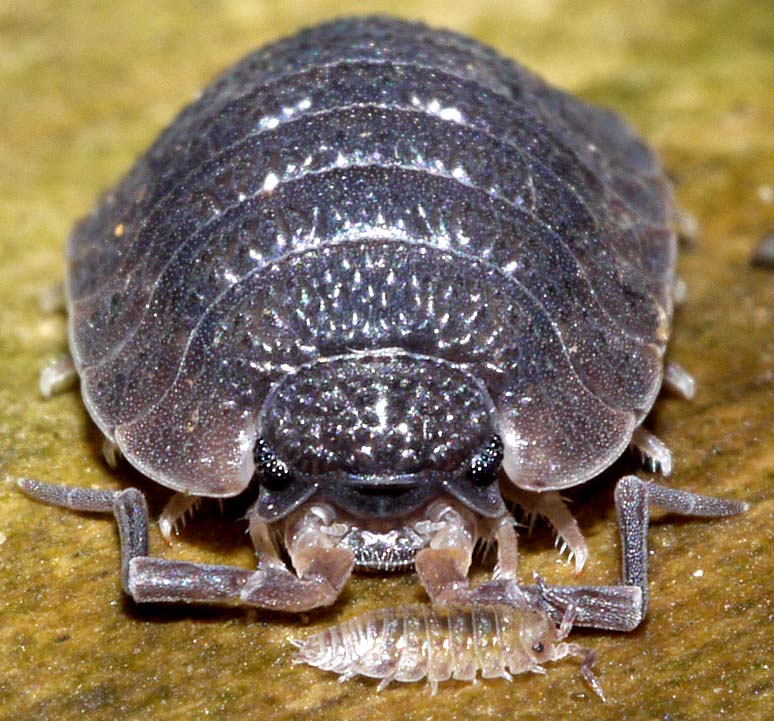
This minute juvenile woodlouse, also just a few millimetres long and looking like it's not old enough to be out on its own, was lurking under the bin lid. To give some idea of how small it was, compared with a full-sized woodlouse ....

........... here's a slightly larger juvenile (about three times the size of the one above), under the watchful compound eyes of a full grown woodlouse.


The prize for the most numerous insects in the compost bin must go to these minute flies, smaller than the owl midges, that breed with amazing speed and in incredible numbers on the decaying fruit and vegetable peelings. Every time I lift the lid I have to step back as a small cloud of them takes to the air. I rarely see singleton flies of this species, because they seem to be ......


.... perpetually mating, in this push-me-pull-you conformation.

When I was a callow youth I used to frequent a barber's shop where they always had a pile Reveille and Tit-bits magazines for customers to leaf through while they waited for a trim. For those unfamiliar with these fine publications (long-since defunct),they specialised in 'tasteful' glamour photos of ladies who seem to be having trouble keeping their clothes on, together with sensational and highly improbable stories (of the 'My ordeal amongst cannibals' variety), Daily Express style editorials about the country going to the dogs ('What has happened to our national pride?) and investigative journalism that lifted the lid on the licentious behaviour of the ruling classes. The latter always involved intrepid undercover reporters visiting sordid establishments in Soho, witnessing goings-on that mostly seemed to involve clergymen, Members of Parliament and burlesque dancers ..........


.......... engaged in this sort of activity. 

The pay-off line for such stories was almost always "disgusted, your reporter made his excuses and left". 

Which is what I did after I lowered the compost bin lid on these three and plunged them back into darkness.