Showing posts with label small heath. Show all posts

Saturday, August 22, 2020

heather moorland in August

 The moorlands of Weardale are a sea of purple heather at the moment, often stretching all the way to the horizon. Billions of tiny, nectar-rich flowers are in bloom, feeding vast numbers of insects, from minute thrips to butterflies.


The flowering of the heather coincides with the breeding season of these heather Colletes bees (Colletes succinctus), below. They lay their eggs in tunnels excavated in the sandy moorland soil, usually on a south facing patch of bare ground, then provision the egg with heather pollen before sealing the chamber. They're solitary bees, unlike the highly organised, social nests of honeybees and bumblebees, but do aggregate their nests in huge colonies. Yesterday we must have walked past many thousands of them, congregating at the entrance to their tunnels and shuttling backwards and forwards to the heather flowers.


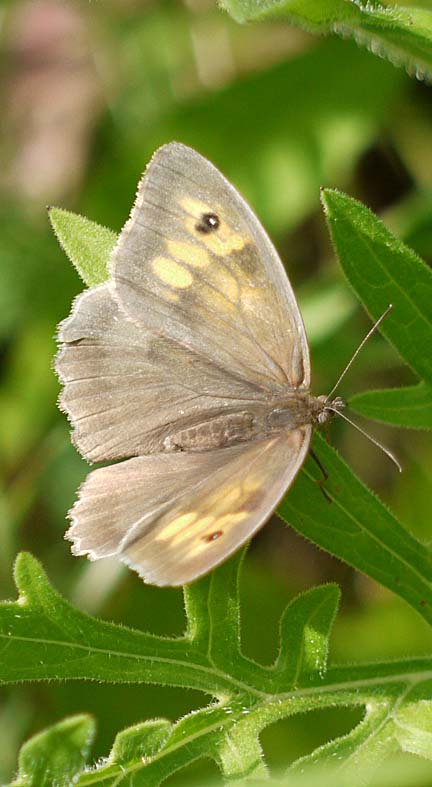
The vast expanse of flowers also attracts butterflies. Yesterday we saw red admirals, small coppers, small tortoiseshells and small heaths. The small coppers breed on dense, transient patches of sorrel that grows quickly on the bare soil after a heather burn.


This 'woolly bear' caterpillar (below) is the larva of the northern race of the oak eggar moth Lasiocampa quercus. It spends two years in the larval stage, overwintering as a larva before emerging to feed again, then pupating over a second winter before it finally emerges as a spectacular moth.


And finally, a rove beetle Platydracus stercorarius, with wings tightly folded under those red wing cases


Saturday, July 20, 2013

A Butterfly Bank: third visit


It's almost three weeks since we last visited the sunny magnesian limestone railway embankment on the disused railway line between Garmondsway and Trimdon, and during that time the withering heatwave has had a major impact on the flora. Most of the species that were in their prime then are coming to the end of flowering and are run to seed, but new flowers have appeared in their place.


The most notable newcomers are fragrant orchids, which are now present in large numbers. Fragrance is rare in orchids - they tend to rely on elaborate floral architecture and colour to attract pollinators - but this species has a powerful, sweet scent. It's individual flowers have a long spur filled with nectar that's only easily accessible to the long tongues of moths and butterflies - and on this visit there were plenty of butterflies along the bank, including .....


..... common blues ....


...... meadow browns, in very large numbers in glades along wooded parts of the old railway line


...... ringlets .....


...... small heaths.....


..... large skippers ....


... and a very fresh-looking small tortoiseshell that must have emerged recently, sunbathing on a limestone ledge, and .........


.......... in glades along the wooded parts of the old railway line, speckled woods. These two are courting - notice how the male is touching the underside of the female's wings with his antenna, perhaps detecting scent scales there (?). The courtship didn't last long because another male arrived and .........


....... a furious butterfly dogfight ensued, during which the female lost interest and flew away.

The newspapers and conservation organisations are quite rightly hailing this as a wonderful year for butterflies, during which their numbers have rebounded, but this seems to overlook the fact that most of those that are on the wing in early summer have actually hatched from eggs that were laid during last year's disastrous summer and have survived the longest, coldest winter in living memory as hibernating caterpillars, pupae or, in some cases adults. That surely says something about the resilience of butterflies to the annual vagaries of our weather and suggests that we need to be far more concerned about protecting habitats, like this wonderful butterfly bank, than the effects of annual weather extremes (not to be confused with long-term climate change, though) 


Tuesday, June 15, 2010

Butterfly Hot-Spot

A visit to Hawthorn Hive on the Durham coast at the weekend coincided with the recent emergence of several butterfly species, including this pristine male common blue and .....
.... and its rather more muted female consort.
The raised beach at Hawthorn Hive - a legacy of past colliery waste dumping - is covered with large patches of bird's foot trefoil, food for common blue and dingy skipper caterpillars, so this sheltered bay is a great spot to find both species - and also several others. The cliffs provide shelter from the wind, unless it's blowing from the East - and the prevailing wind is mostly south-westerley. Paradoxically, it's only the raised beach - produced by past industral activity - that protects this wonderful site for flowers and insects from being inundated by the waves. It's slowly being eroded and once it has gone the waves will be able to reach the base of the cliffs where.....

..... this green-veined whire was collecting nectar from bloody crane'sbill flowers...

...... while this large skipper basked on the same plant's foliage....
... and another .... amongst the grasses.
On the cliff tops above small heaths were flying in the grassland. They have a very distinctive way of sunbathing. Most butterflies orientate themselves with their back to the sun and open their wings to absorb the heat - like the common blues and large skipper above. Small heaths keep their wings folded but turn their whole body at 90 degrees to the sun's rays, so the underside of the wings on one side of the body only faces the sun.