
Today's Guardian Country Diary describes a walk from Forest-in-Teesdale to Winch Bridge near Bowlees, along a popular stretch of the Pennine Way on the south bank of the river Tees. The 'forest' in question is the location of the juniper forest that covers much of the fellside south of High Force waterfall. It's full of wonderfully gnarled, wind-pruned trees that have a fragrance of gin if you crush their foliage between finger and thrumb.

A little further down the hill there's a sweeter kind of fragrance, when you come to the Sphagnum bog, which I guess covers about an acre - and last week was full of scented bog asphodels at the peak of flowering.
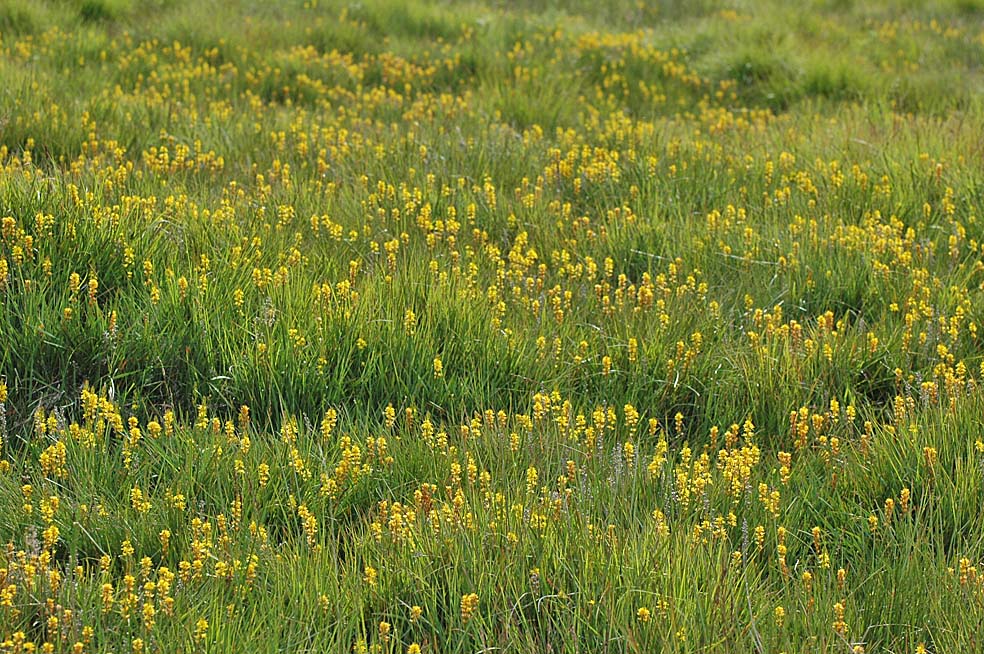
Vast numbers of these flowers were in bloom - a better display than I have ever seen before. Teesdale is rightly famous for its rare spring gentians, but in summer the asphodels are a stunning spectacle too.


The Latin name for the plant is Narthecium ossifragum, alluding to the fact that animals were once believed to develop brittle bones if they grazed on this plant - ossifragum means 'bone breaking'. The low calcium levels in these boggy soils are a far more likely cause of any skeletal problems in grazing animals.


Further down the path the meadows beside the river are full of greater burnet .....


.... and meadowsweet, while on the rocky islands in the river ...

... the rather rare shrubby cinquefoil is in bloom ....

.... with its egg yolk-yellow flowers. In winter, when the river rises (especially after rapid snow-melt up on the fells) these shrubs are completely submerged but their roots penetrate deep into the fissures in the rocks, anchoring them in the current.

Some of the best floral displays are in the pastures near Winch bridge, full of betony ....

... and devil's bit scabious (click for a larger image, to see this more clearly).

All of these flowers are a major attraction for butterflies, like this newly-minted female common blue.

The appearance of these fine Boletus toadstools were a reminder that autumn is on the horizon.

The continuity of the wonderful flora in the pastures along this stretch of Teesdale really depends on carefully managed grazing, and the quote from a farmer inscribed under Keith Alexander's scultures describes what would happen if the grazing stopped: "It reverts to scrub. When it's gone, it's lost".




 Posts
Posts


