Thursday's Guardian Country Diary is about hedges - well, about one old, overgrown hedge, a favourite that has produced a spectacular crop of autumn fruits this year.
 Most old hedges date from the period of the Enclosure Acts, when tracts of common land were enclosed, usually via the planting of hawthorn (aka quickthorn) hedges. The exceptions are much older assarts - remnants of ancient woodland around the edges of fields that were hacked out of the Wildwood by our distant ancestors.
Hawthorn is an ideal hedging plant- fast to establish, tolerant of cutting and forming a thick, stock-proof boundary if it's well maintained. So that it remains densely branched at its base. This was originally achieved by laying, a process that involved a great deal of skilled manual labour. The technique, which is seldom seen these days, is described and illustrated here.
Almost as soon as a new hedge was established it would have attracted birds that arrived to eat the hawthorn fruits and they in turn would have left seeds of other succulent fruited plants in their droppings, including ...
........brambles (this wonderful crop, beyond the reach of bramblers, was cascading down the overgrown hedge that's mentioned in the Country Diary), and also .......
.... elder, which has produced a massive berry crop this year.
Sloe (aka blackthorn) was occasionally used as a hedging plant but has the disadvantage that it spreads laterally into fields, via sharp-pointed suckers that grow from its spreading roots. On the other hand, those sloes are great for flavouring gin.
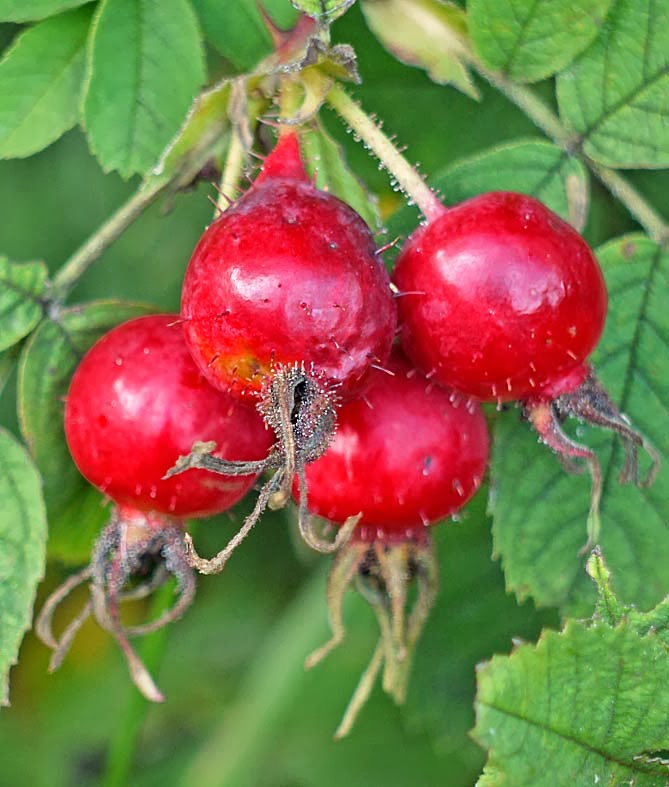
Like brambles, briar roses scramble up through hedges, using their thorns for support, adding to the autumn berry crop ....
.... along with bird-sown honeysuckle which twines around stems of supporting hedgerow shrubs, producing berries that blackbirds are very fond of .. and ....
..... often producing a few flowers right up until the first frosts.
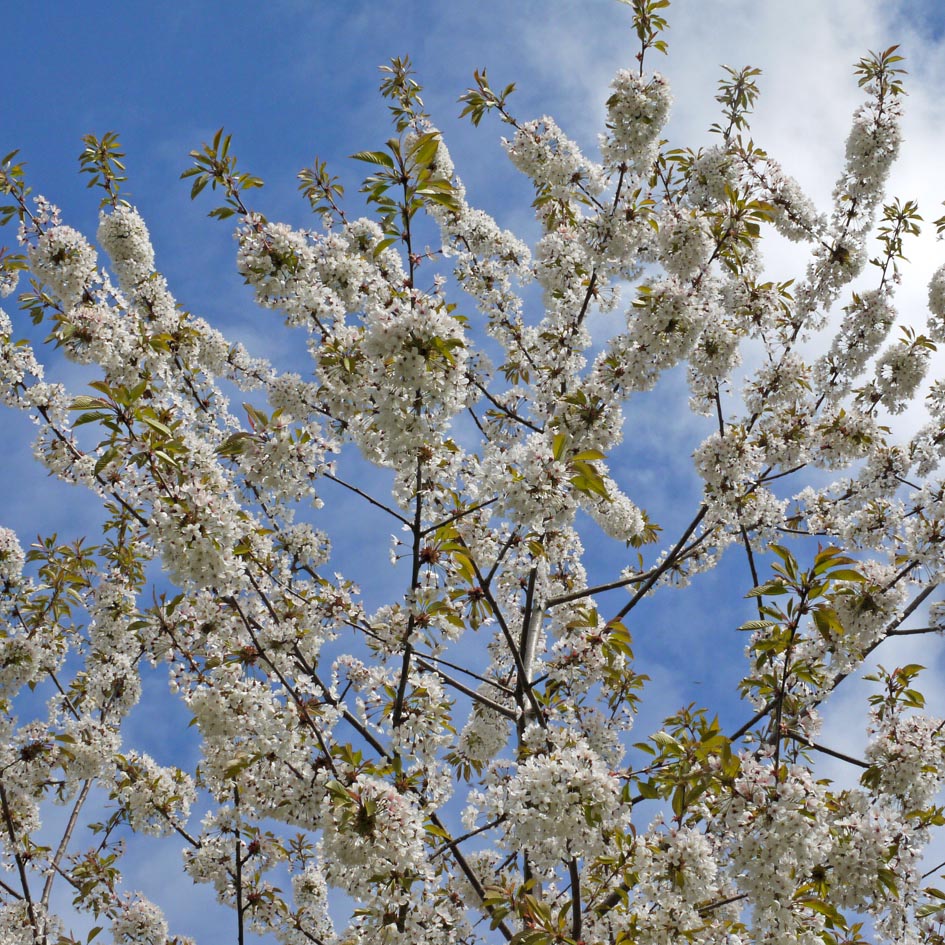
So gradually planted hedges naturally acquire an ever-richer flora, together with herbaceous plants that used the hedge as a refuge from surrounding cultivation.....
........ along with a wide range of invertebrates, like this snake millipede that we found coiled up and asleep at the top of a tall brome grass stem in the hedge ....
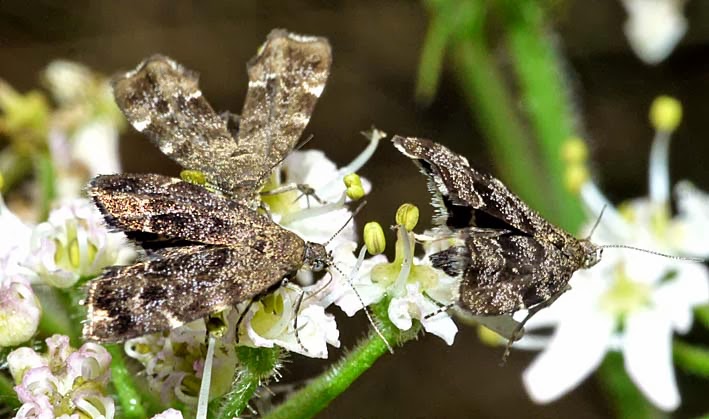
............ and these nettle tap moths. They breed on hedgerow nettles and feed on hogweed flower umbels, that often continue to produce a few flowers and some nectar right up until the first frosts.

Sadly many old hedges have been grubbed out to enlarge fields. Some hedges are still being planted, like these that were planted in mitigation on land that had been opencast mined. They are mainly a double row of hawthorn, with a sprinkling of other shrub species like hazel, with a standard tree - usually ash - at regular intervals.
Annual mechanical cutting, with a tractor equipped with a cutter bar or a flail cutter, trims them into neat, uniform, dense stock-proof hedges but severely limits their value as a wildlife resource;the annual trim removesmost of the current year's grow that will bear the following year's flowers and fruit, so the value of hedges that are maintained like this is much less than a hedge like ......
........... this, which has been allowed to grow, has a broad margin and retains all its flowering potential, so that in summer ......
.......... it will look like this. Dense, overgrown hedges have the potential to act as wildlife refuges and wildlife corridors.
It is important that hedges are maintained, otherwise they simply develop into lines of trees but cutting hedges rotationally on a three-year cycle, rather than annually, would greatly improve their value as cover for birds and mammals, providing a supply of pollen and nectar for insects and autumn fruits for birds and mammals.
Simply planting more hedges isn't necessarily a particular effective wildlife conservation measure, although it's better than nothing. It's the quality of hedges that really counts, and that depends on how they are maintained.











 Posts
Posts


