Showing posts with label carrion crow. Show all posts

Thursday, March 21, 2024

Early spring in the Derwent Walk Country Park, Gateshead

 Some pictures from a walk last week in the Derwent Walk Country Park, Winlaton Mill, Gateshead.
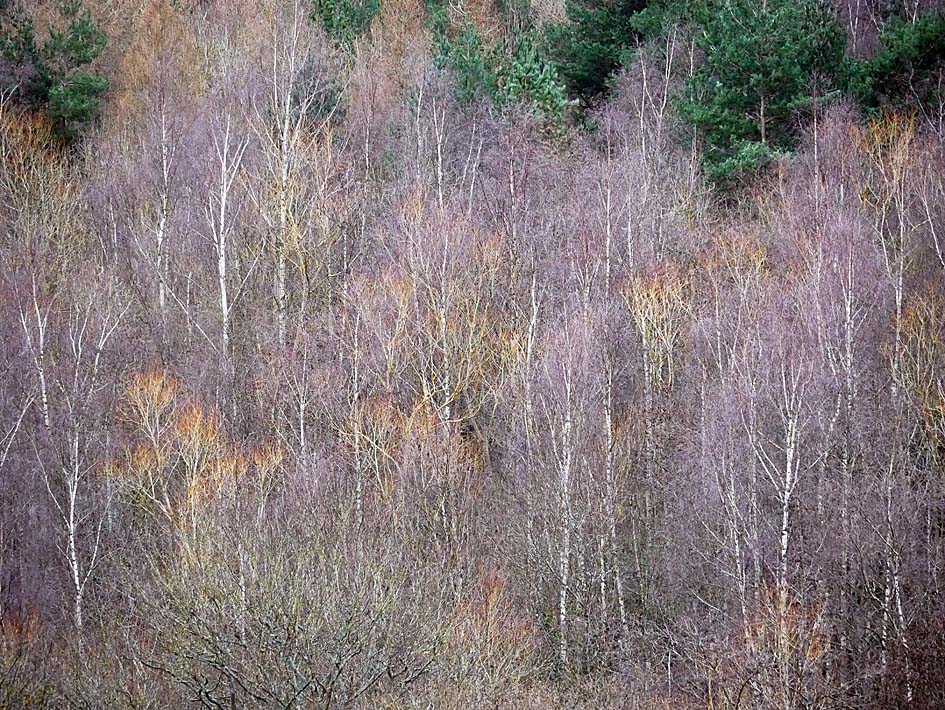
Silver birches and willows, seen from the top of the Nine Arches railway viaduct over the river Derwent. The buds of the birches take on a purplish hue at this time of year, as they begin to swell, while the willows have an orange tint.
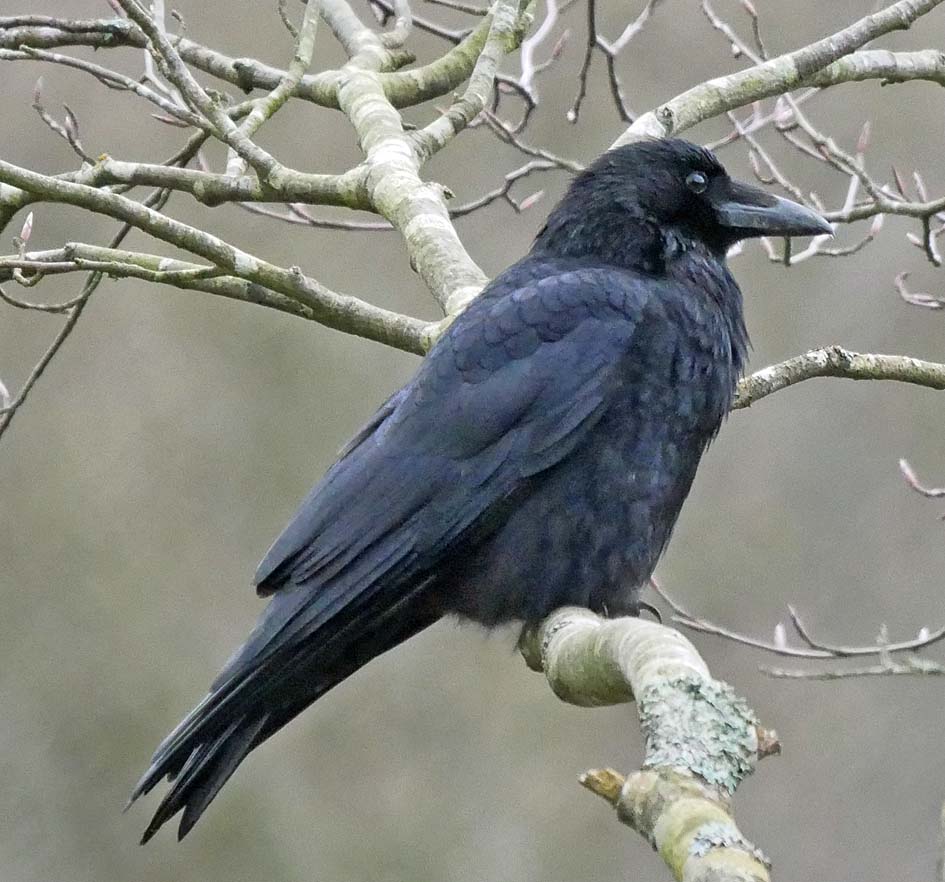
Carrion crow. Handsome birds, with a hint of blue iridescence in their plumage.
A fine display of colt'sfoot

Dutch rush Equisetum hyemale spore cones beginning to disperse spores. An uncommon plant, but there are some fine patches of it beside the footpath.
Golden saxifrage in full flower in a ditch beside the old railway line.

A heron with some fine chest plumes, feeding in the river Derwent.
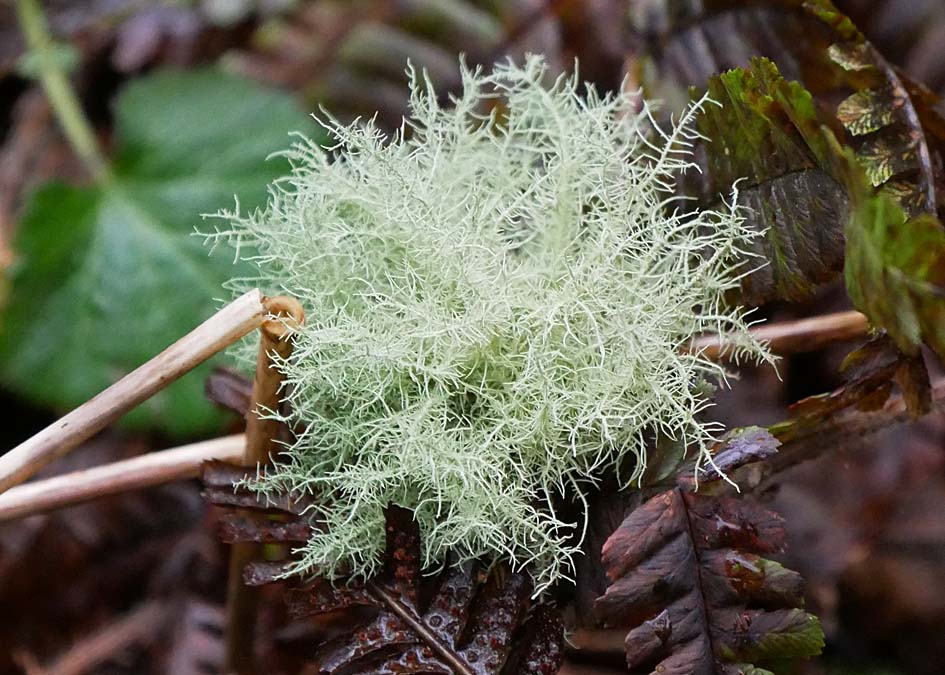
Beard lichen Usnea sp. Remarkable that this pollution-sensitive species is now established here, when you consider that this was formerly a location for coal mines, an ironworks and the Derwenthaugh coking plant that only closed down in 1986.

A magpie in one of the meadows
Primroses in flower
A soaring red kite

Toads coming out of hibernation in the woodland, heading for Clockburn lake, on the site of the old coking plant
Wood anemones in flower in woodland beside the river Derwent


Tuesday, January 24, 2023

Crows versus Magpies


Magpies have nested at the bottom of our garden annually for about twenty years. Until last year they returned every spring to the massive heap of sticks in the centre of an old hawthorn, which was well hidden. Last year they built a new one in a fast-growing Norway maple, about ten feet higher than their previous nest and very exposed to potential predators. A pair of magpies have been standing guard over the nest since late December, but now it looks as though they are being evicted by carrion crows.


A single crow turned up yesterday morning, pecking at twigs in the nest and evidently rearranging them for its own comfort. It provoked a furious and very noisy reaction from the magpies.


The magpies made a lot of fuss but never approached within pecking range of the crow's beak.


Then the crow started calling and within a couple of minutes its mate turned up, provoking more fury from the magpies.


So it seems that the pair of crows have taken over. The magpies are still loitering, but the crows came back this morning. It will be interesting to see how this conflict develops, and who will lay eggs in the nest.


Sunday, September 27, 2015

Crow v. Sparrowhawk

A couple of days ago we watched this aerial dogfight between a crow and a sparrowhawk near Wolsingham in Weardale.


The sparrowhawk was just cruising along, minding its own business, when the crow dived down on it, missed, soared upward ...


... turned sharply and then had another go.


The hawk veered away ....


... then the crow tried again, this time from below, while ....


... the sparrowhawk looked down to keep an eye on its pursuer ....


... before diving down on the crow as it overshot its target ...


After that the crow kept a respectful distance before ....


... they both went their separate ways

Saturday, March 30, 2013

A Rarity.........


Not the birds ............. the sky .................  blue

Still adjusting to the novelty of it, after weeks of grey skies  .......


Saturday, March 2, 2013

Harassment...


Yesterday, when we were walking along the river Tyne at Wylam, a cacophony overhead drew our attention to this gang of crows mobbing a buzzard. Birds of prey must get fed up with this constant harassment but this raptor had the situation well under control. It soared higher and higher in tight circles then, when the crows got too close, threw in a wide circle that left them cawing at each other in the centre, wondering where their victim had gone. 

Wonderful to watch - a masterclass.

Wednesday, March 28, 2012

Crow Twig Juggling ...


The willow-leaved (or weeping) pear tree Pyrus salicifolia in our garden has received its annual pruning this week by crows that use its long, pliable twigs as nest material - but each new generation of crows has to learn how to break them off and carry them away. Crows that are new to the game grip the twigs mid-way along their length and simply try to pull them off - which never works because the twigs are tough and very flexible.  But after a few attempts they soon learn that if they grip the twig near its attachment to a larger branch and then use their powerful beaks to bend it sideways it will snap, because the thickened basal end is more brittle. Then a few more hacking blows with that beak and a bit more tugging will usually remove the prize...... 


...... but then they're left holding one end of a long twig, which makes the flight back to the nest very awkward ....


... so they develop a technique of bouncing on the twigs, flapping their wings and tossing their heads to shift their grip towards the middle of the twig. Beginners at this game drop a few before they perfect their technique but after a few attempts ....


...... they become very proficient and shift their grip until .....


.... they have a perfectly balanced and aerodynamically stable load.


Smart birds, crows...

Thursday, February 23, 2012

Mutant Crows


We have a weeping pear (Pyrus salicifolia) tree in our garden which is regularly targeted by crows for materials for nest building and nest repair at this time of year. Its slender  twigs are long and pliable - desirable qualities for weaving into a nest - and the birds struggle mightily to tear them off, often with limited success. This morning the tree's assailant was a little different - a mutant crow with white wing primary and covert feathers.


This individual was due for a moult, judging by the wear and tear visible on the primary feathers, which are very tattered.


Single birds with groups of unpigmented feathers like this turn up quite frequently in most species (including our garden blackbirds) but what was interesting about this morning's visitor is that it was one of a pair, with virtually identical mutant markings. 


A single crow with some white feathers that mates with a normal all-black crow would be likely to produce all-black offspring if the white feathers were due to recessive gene mutation but if both birds in the pair were similarly mutant then some or perhaps all offspring (depending on how may genes are involved and how they interact) would inherit the trait, so an increasing number of birds like this should appear in the population. The fact that these two mutants seem to have paired up raises some interesting questions about how they choose potential mates. Each would have had an unlimited supply of normal all-black mates to choose from but they see to have chosen a mate that resembles themselves. This kind of non-random mating in the population (assortative mating, in the parlance of evolutionary biologists who study population genetics) should increase the frequency of their particular feather patterns in the population. It'll be interesting to see if white-winged crows become more prevalent around here in future years if these two are indeed a breeding pair and do successfully raise a brood that are similarly marked and show a similar preference for choosing mates.


Sunday, March 13, 2011

.......as the crow flies


"Turn east, then travel three miles as the crow flies...". How often have you heard that expression? Where does the idea of crows travelling in direct, uninterrupted flight lines, the shortest route between A and B - come from? Most crows that I've watched seem to be pretty easily diverted from the straight and narrow by anything that looks like it might be edible, like these two that were waiting to swoop on discarded chips on the seafront at Sunderland this afternoon...... so maybe that's where the expression comes from - their tendency to head straight as straight as an arrow for the nearest food supply. According to one web reference the earliest use of the idiom 'as the crow flies' dates only from 1767.

Friday, December 25, 2009

Christmas Dinner in a Bun


A combination of cabin fever, after too many days of snow, and a burning desire to break the mould of our typical Christmas led us to take our Christmas dinner in picnic form today, on the seafront at Tynemouth. And mighty fine it was too; glorious sunshine for a post-picnic walk along to North Shields fish quay and back. Two of the beneficiaries of our alfresco Christmas dinner were this black-headed gull............


...and this feral pigeon - both fine specimens of nature's waste disposal units.


The walk to North Shields yielded this handsome curlew...and......


... numerous oystercatchers whose beaks almost glowed in the low-angle winter sunshine and which....


....hopped with great aplomb from rock to rock, plus........


.... this crow that had found its own Christmas dinner that it had to defend against some pretty fierce-looking...


...great black-backed gulls..... while, also in black-and-white, up at the fish quay we came across this....


... grubby-looking pied wagtail, looking for scraps, and a...


... drake eider swimming .........


amongst the trawlers that were in harbour for Christmas. Then, on the way back we passed .....


... turnstones, that seemed to have added de-icing grit to their diet, and ....


... this very smartly turned-out redshank, complete with leg ring. But, best of all, there were scores of these wonderful...


... golden plovers, whose feather edges literally glowed golden in the afternoon sunlight. In about three and a half months I'll be listening to their plaintive calls as they begin to arrive back on their breeding grounds on Chapel Fell in Weardale.

A Christmas day to remember.

Merry Christmas to all........