Not many big fungi around in my neck of the woods at this time of year, but plenty of interesting smaller ones.

This is yellow brain fungus Tremella mesenterica, a parasite on another fungus called Peniophora that grows on dead gorse stems.


I first saw crimp gills Plicaturopsis crispa (upper and lower-side views above) near Durham city ten years ago (original post here), and since then they have become very common, growing on fallen dead birch and hazel branches


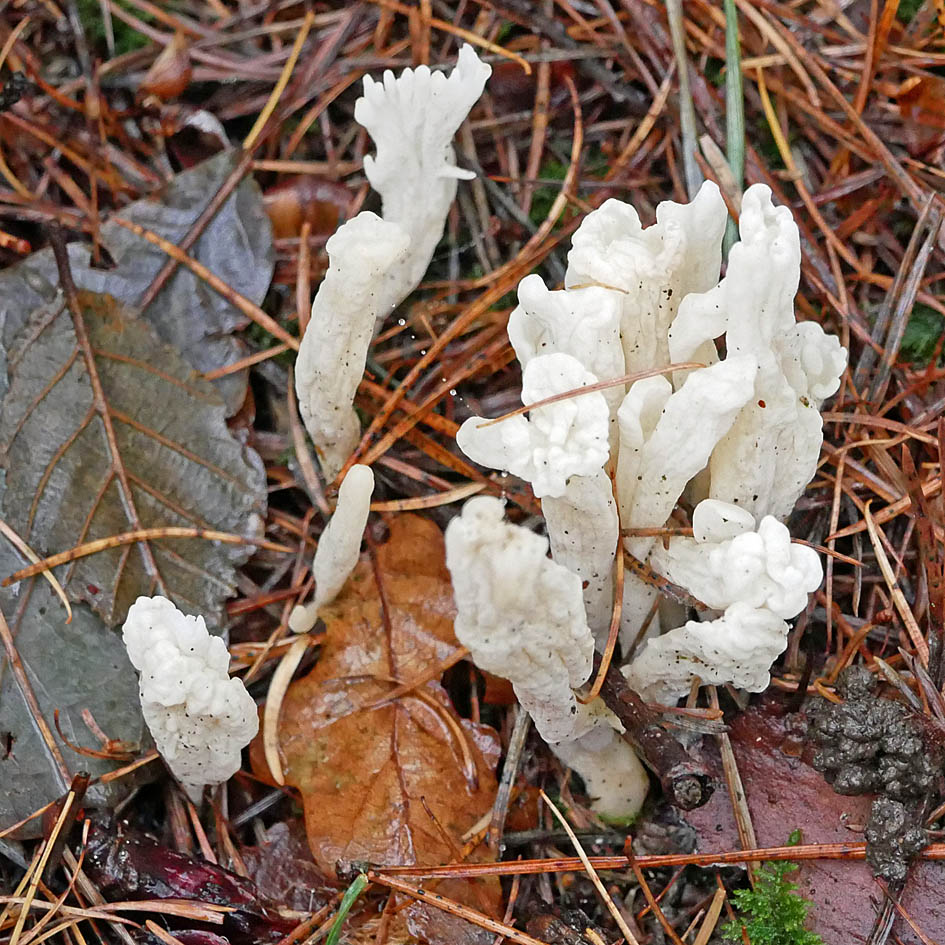
These are ivory coral Ramariopsis kunzei, growing in a local Scots pine plantation


Coral spot Nectria cinnabarina exists in two forms. The orange pustules are the asexual stage, producing conidiospores. Eventually, they give way to the cinnabar-coloured sexually reproducing form, that introduces genetic variability into the population.




 Posts
Posts


