Showing posts with label moorlands. Show all posts

Saturday, August 22, 2020

heather moorland in August

 The moorlands of Weardale are a sea of purple heather at the moment, often stretching all the way to the horizon. Billions of tiny, nectar-rich flowers are in bloom, feeding vast numbers of insects, from minute thrips to butterflies.


The flowering of the heather coincides with the breeding season of these heather Colletes bees (Colletes succinctus), below. They lay their eggs in tunnels excavated in the sandy moorland soil, usually on a south facing patch of bare ground, then provision the egg with heather pollen before sealing the chamber. They're solitary bees, unlike the highly organised, social nests of honeybees and bumblebees, but do aggregate their nests in huge colonies. Yesterday we must have walked past many thousands of them, congregating at the entrance to their tunnels and shuttling backwards and forwards to the heather flowers.


The vast expanse of flowers also attracts butterflies. Yesterday we saw red admirals, small coppers, small tortoiseshells and small heaths. The small coppers breed on dense, transient patches of sorrel that grows quickly on the bare soil after a heather burn.


This 'woolly bear' caterpillar (below) is the larva of the northern race of the oak eggar moth Lasiocampa quercus. It spends two years in the larval stage, overwintering as a larva before emerging to feed again, then pupating over a second winter before it finally emerges as a spectacular moth.


And finally, a rove beetle Platydracus stercorarius, with wings tightly folded under those red wing cases


Thursday, June 1, 2017

Curlews


Today's Guardian Country Diary  is about birds that nest on moorland in Weardale, and the ways in which they defend their fledglings. 

Of these, my favourite has to be the curlew. In spring it has that spine-tingling mating call delivered in a long glide across the heather but now, when there are fledglings about, its alarm call is sometimes almost like the yelping of a small dog.

These birds circled around us, trying to lure us away from their fledglings, while we were walking part of the Weardale Way near Wolsingham. 


Monday, August 10, 2015

The Red Mist


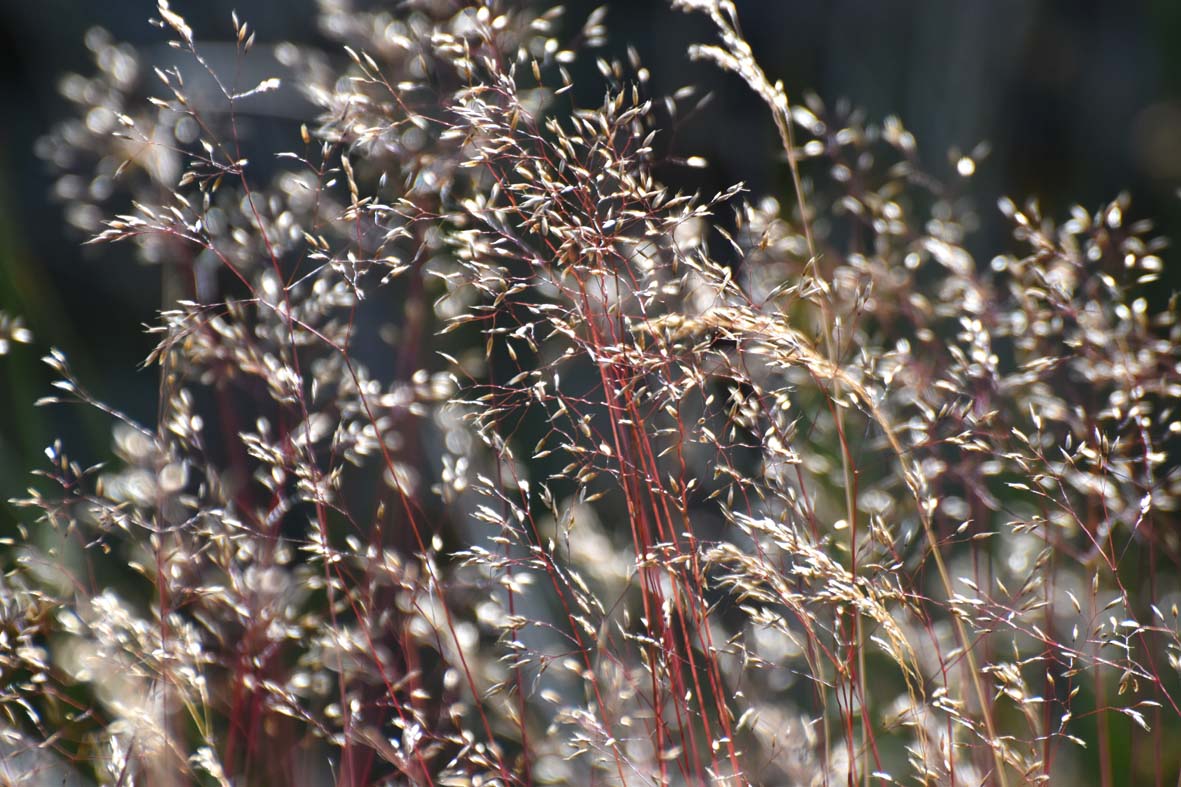
This plant, wavy hair-grass Deschampsia flexuosa, is common on the moorland above Blanchland in the Derwent valley in Northumberland. 


It's very attractive, with its red stems and tiny florets but there are places on the moor where it is truly spectacular.


The grass really thrives best after a muir burn, where patches of burnt ground are left between the heather, temporarily rich in mineral nutrients. Then it grows so densely that it forms what seems like a red mist......


...that shimmers in the sunlight when it's buffeted in the wind.

Wednesday, March 6, 2013

Muir burning .....


Muir burning in Teesdale yesterday - burning off the old heather stems so that new shoots develop, to feed grouse. A period of dry weather and light winds produced good conditions for these controlled fires.

Click image to enlarge.

Tuesday, June 5, 2012

Defending the Family


There are newly-hatched chicks everywhere out on the moors at the moment and different birds have their own particular strategies for deflecting attention from their offspring.


This pair of grouse, which we encountered on the moors above Blanchland in Northumberland yesterday, just stood on the wall a few feet away from us, hoping that we'd look at them rather than search for their chicks, but...


....the curlews went for the hysterical approach, filling the valley with their alarm calls that at times sounded almost like dogs yelping. It's a stressful time for these avian parents at present.

Saturday, August 29, 2009

Purple Haze

Heather, or Ling, Calluna vulgaris
Heather moorland
The heather moorlands in the North pennines are just about at their best now, with hundreds of acres of hillside clad in billions of tiny purple flowers. Although heather moorland looks like a uniform sea of purple there are three different species that contribute to the purple haze that shimmers on the fellside on a hot summer afternoon. Cross-leaved heath (Erica tetralix) grows in the boggier patches and flowers first, followed by bell heather (Erica cinerea) and ling or true heather (Calluna vulgaris) which both grow on drier soils. Flowers of the first two species are distinctly bell-shaped and in bell heather they’re concentrated in clusters at the shoot tips, whereas in cross-leaved heath they tend to be distributed more uniformly down the stem. The leaves of cross-leaved heath are distinctive too, arranged in whorls of four. Ling, in the close-up photograph above, is far the commonest of the three and has more densely packed, paler, smaller flowers distributed over long lengths of stem, with leaves that are tiny in comparison with the other two species. The heather moorlands of the north Pennines are skilfully managed by cyclical of burning in strips, removing the old, moribund heather. The fast-moving fire burns away the old heather without killing the roots, which then regenerate tender new shoots that are an important element in the diet of red grouse. Burning in strips creates a varied habitat with a mosaic of age structures, providing a habitat for a wonderful range of birds, insects and reptiles............more of them anon.