Showing posts with label King Penguin series. Show all posts

Friday, May 13, 2016

A Marine Biology Professor who loved Curves


The King Penguin series of books, published between 1939 and 1959, covered a very wide range of topics. This is one of my favourites because it seems to have been written by someone who was untroubled by the boundaries between the arts and science.


Seashore Life and Pattern was written by T.A. Stephenson, Professor of Zoology at the University of Wales, and published in 1944. 


Thomas Alan Stephenson was born in 1898 and died in 1961. He was a talented zoologist and artist and was a leading authority on sea anemones, writing and illustrating the definitive texts on them. He was elected a Fellow of the Royal Society in 1951. You can read more about his career in science here.

He was clearly someone who appreciated nature for its aesthetic qualities, as well having the enquiring mind of a scientific researcher. He was fascinated by the relationship between beauty in nature and beauty in art. 


In his own words, in his introduction " ..... the author of the volume has been painting seashore and other subjects for thirty-five years, and is as much interested in marine life from a decorative point of view as from a zoological."


Stephenson produced all the illustrations for the book - monochrome in the text ....


 ... and colour plates at the end. He also designed the book cover.


"It is perhaps a pity, " he wrote in his introduction, "that artists and scientific workers are, naturally enough, usually afraid to venture a single inch beyond the boundaries of one another's territory. They have some fields of common interest; and sooner of later these must be explored by both sides....."

Stephenson's book has one of the most unusual and charming dedications that I have ever some across, and perhaps encapsulates that 'common interest'. Whenever scientists write dedications to those who have inspired them the result is usually interminably tedious and dull but here the author simply chose to illustrate his sources of inspiration, in the shape of the elegant curves of his wife and of a fast car. 

You don't see dedications like that in scientific publications these days, sadly.


Sunday, May 1, 2016

Johannes Hedwig, moss sexual reproduction and King Penguins


The King Penguin series of books began publication in 1939 and continued through 76 titles until 1959. These slim volumes covered a remarkably wide range of subjects, ranging from ballet to ballooning and from cricket to the crown jewels. You can read more about them here.

Number 57, published in 1950, was A Book of Mosses by Paul Richards.


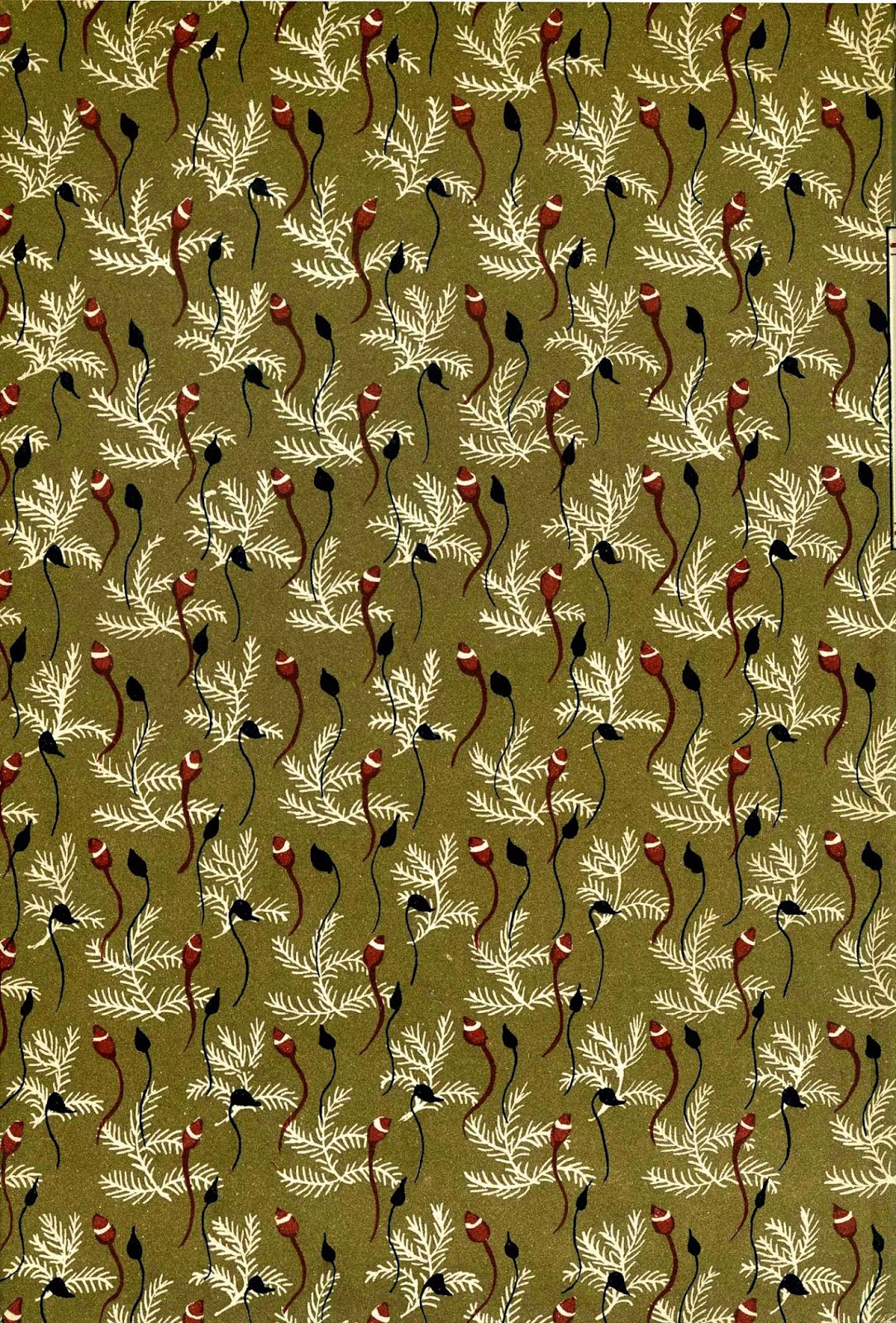
King Penguins were noted for their beautifully designed covers and this title carried a pattern of stylised moss plants.

In addition to the well written text, this volume contained exquisite illustrations taken from Johannes Hedwig's Descriptio et adumbriato microscopico-analytica muscorum frondosorum, published between 1787 and 1797.

Hedwig's book contained ground-breaking researches on the structure of mosses, using the best microscopes that were available in the late 18th. century. In his day the details of the reproduction and life cycle of mosses was unknown, but his observations led him to speculate, accurately, that mosses carried male antheridia and female archegonia that were analogous to the pollen and ovules of higher plants.

Hedwig was a very acute observer and skilled artist. The plate above shows his observations on the peristome arrangements of moss capsules, Atrichum undulatum (top left); Grimmia apocarpa (bottom right); Tortula rigida (top right); Camptothecium sericeum (centre left); Fontinalis squamosa (bottom left)


Here is Rhacomitrium lanuginosum and ........


.... here's Camptothecium sericeum.


King Penguins cost one shilling each when they were first published and were very popular, so most titles aren't hard to find in second hand bookshops. Many of them cover natural history themes.

You can read an on-line version of Hedwig's original book by clicking here The text is in Latin. The illustrations are astonishingly good, especially when you zoom in on the detail.