Showing posts with label elm. Show all posts

Thursday, May 18, 2023

Wind pollinated trees and hay fever

 As winter draws to a close I always look forward to the first hazel catkins, that signal a change in the seasons ......... but then, when spring finally does arrive, I remember that I suffer from hay fever. The early-flowering trees are wind-pollinated, producing vast clouds of sneeze-inducing pollen. 

Wind pollination is a chancy business and once the pollen is released it's rapidly diluted in the air, so the chances of an individual pollen grain landing on a female flower stigma, leading to the formation of a seed, decreases exponentially with the distance between then. So the only way to improve the odds is for trees to release great quantities of pollen

Male catkins of hazel.

Tiny, female stigmas of hazel

Male flowers of ash, about to open

Ash flowers, fully expanded


Silver birch male catkins, a major contributor to hay fever
Silver bird male catkins


Elm flowers. Before Dutch elm disease arrived, the bare crowns of mature elm trees were covered in a purple haze of flowers, a magnificent sight, now just a memory.






Most wind-pollinated trees produce their flowers on bare twigs, unencumbered by foliage that might hinder pollen release, but beech is an exception. It may be that beech bud burst is delayed because its foliage is very sensitive to late frosts. 

Evergreen coniferous trees like Scots pine tend to produce their male, pollen producing cones on the tips of their branches, well clear of the foliage, where pollen is easily carried away by the wind.

Tuesday, March 21, 2023

A slow start to spring

 It has been a hesitant spring here in County Durham, in the North Pennines, but a few wild flowers are beginning to bloom. Here are some from the first half of March.


Colt'sfoot, in Teesdale and beside the river Tyne in Hexham

Butterbur, beside the river Tyne in Hexham yesterday
Elm flowering on the edge of woodland near Wolsingham, Weardale
Yellow star of Bethlehem, locally rare, just coming into bloom during the first week of March, beside the river Wear near Wolsingham, Weardale. I've known this small population for over 40 years and it is increasing very slowly.

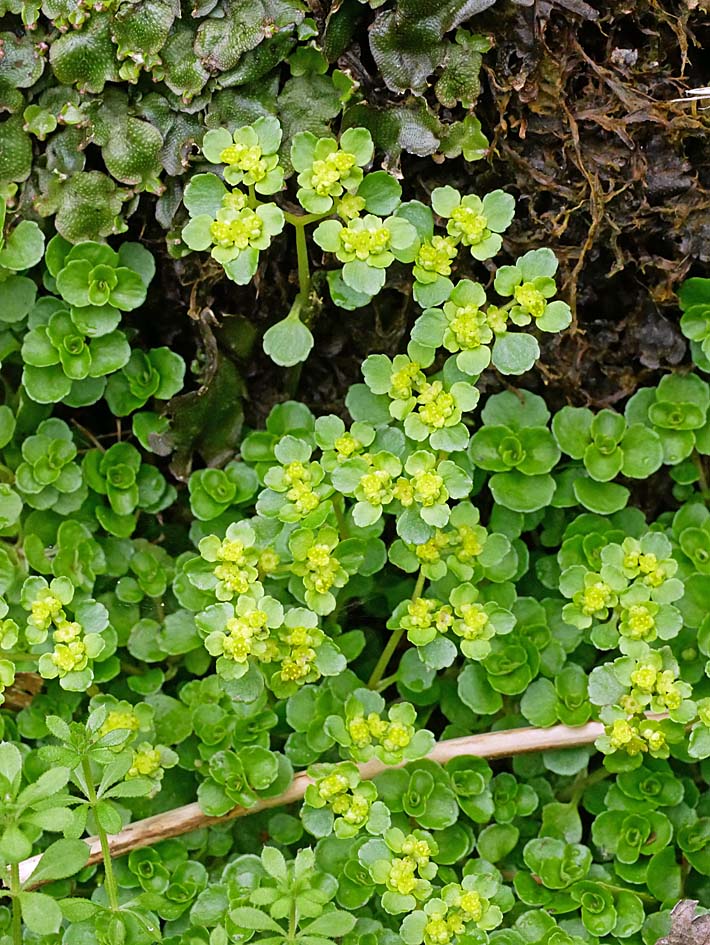
Opposite-leaved golden saxifrage, in Teesdale and at Hexham in Tynedale

Hairy bittercress, infesting my garden and already producing seed pods
Primroses in the snow in my garden


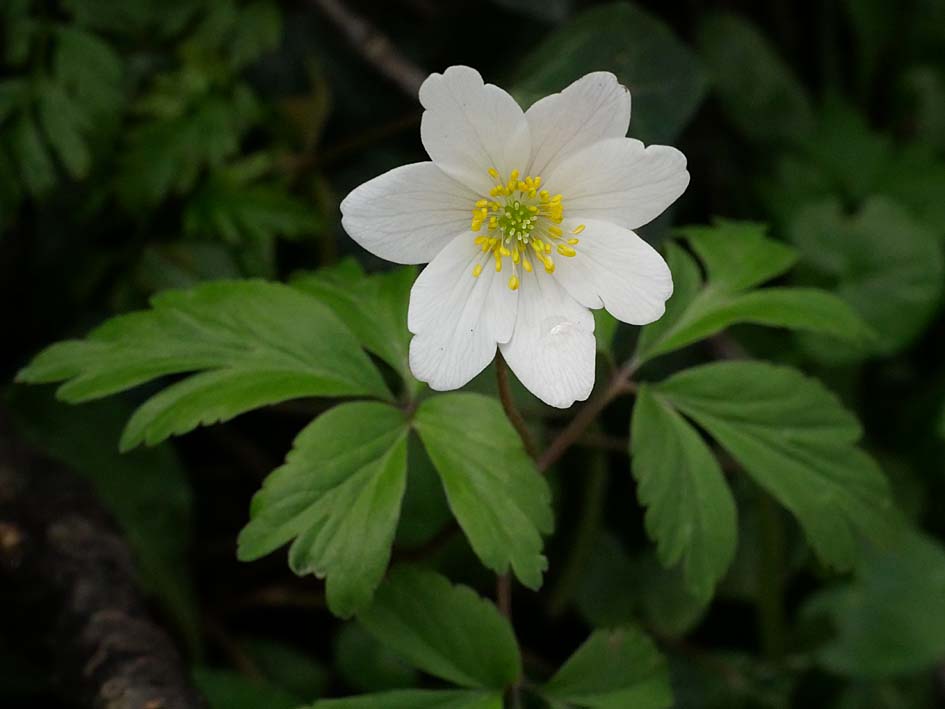
Wood anemones in woodland beside the river Tees at Egglestone

Barren strawberry growing in an old wall in Teesdale
Some early blackthorn blossom, from the beginning of the month
Cherry-plum at Willington in the Wear valley. The earliest blossom was damaged by freezing temperatures and snow

Male flowers of dog's mercury, in a woodland in Teesdale

Stinking hellebore flowering near Hawthorn Dene on the Durham coast, at the beginning of the month

Winter aconites flowered at the end of February and had run to seed by early March. These are in the churchyard at Wolsingham in Weardale.


Dog violets, flowering in my garden today

Monday, April 20, 2015

Woodland walk along the river Tees that J.M.W.Turner trod 200 years ago


This is the view of the river Tees from Abbey bridge near Egglestone, on a tranquil spring day. When the snow melts in Upper Teesdale this becomes a raging torrent, roaring through the rocky gorge. 


The woodland on the steep banks of the river here is exceptionally beautiful in spring, carpeted with wild flowers. Last week wood anemones were the star of the show; next week the bluebells will take over.


Fallen trees are left to gently decay and often develop their own 'garden' of flowers as they rot - like this one with a flora of wood anemone, ramsons and herb Robert.


Last week the bluebells had just begun to flower but it will be early May before the tree leave canopy begins to close over them. The fully-grown trees are mostly sycamore and oak.


The path winds through a dense carpet of wood anemones, high above the river.


Wood speedwell Veronica montana


When we arrived there was still a chill in the air and dew on the leaves, so the wood anemone flowers were all nodding downwards ...


..... but by mid-morning, as the sun climbed higher in the sky, they turned to face it.


This wood anemone had purple leaves.


Some early wild cherry blossom, hanging over the river.


Wood sorrel, nestling against a moss-covered tree base. The leaves fold down at night, like triangular tents.


Beyond the woodland the path passes through pastures, with ground ivy Glechoma hederacea flowering in the shelter of a dry stone wall.


Last week the first influx of warblers arrived, with this willow warbler and blackcaps singing


Last time we passed this way the elms were just coming into flower. Today their clusters of seeds were well-formed.


A bee-fly, a parasite of mining bees, sunbathing in a clearing.


Crane-flies mating.


A comma butterfly soaking up the spring sunshine after a long hibernation.


In 1816 J.M.W. Turner must have walked this footpath and perhaps sat somewhere near here to sketched this scene, at the confluence of the river Greta and the river Tees, which he painted in 1818. I like to think that perhaps he sat under this ancient oak, which would have been more youthful then, to view the scene, which you can see in his painting by clicking here.