Showing posts with label Herbal medicine. Show all posts

Monday, June 1, 2026

Ox-eye daisies in a County Durham churchyard


St. Brandon’s, at Brancepeth, County Durham, is a shining example of the way in which an ancient churchyard can be managed for the benefit of people and native wild flowers. The south side of the churchyard is a wild flower meadow, with mown paths between 18th. and 19th. century memorial stones.

Throughout spring, drifts of snowdrops have been followed by daffodils and bluebells, then cowslips that last week ceded centre stage to thousands of waist-high ox-eye daisies Leucanthemum vulgare.


In The Englishman’s Flora (1960) botanist-author Geoffrey Grigson listed about 30 local, colloquial names for Leucanthemum vulgare; some familiar, like moon daisy, dog daisy and marguerite, others less so, like Billy buttons, crazy Bett, hayweed and poverty weed, that have fallen out of use.

You might expect that a plant known by so many names would have been part of the daily lives of past generations, used in herbal medicine.

According to John Pechey, in his The Compleat Herbal of Physical Plants (1694) it “cast forth Beams of Brightness” so just looking at it might do you good: a nature cure to boost mental wellbeing.

But there’s more: “The whole herb, stalks, leaves ad flowers, boyl’d in posset-drink, and drunk, I accounted an excellent remedy for an asthma, consumption and difficulty of breathing, “ he claimed.” ‘Tis very good in wounds and ulcers, taken inwardly, or outwardly applied,” he assured readers, and went on to mention a use that might have benefitted quaffers of too much chilled beer during the recent heatwave: “A decoction of the herb cures all diseases that are occasion’d by drinking cold beer when the body is hot.”


Pechey’s herbal is available to download or read on-line. Its full, less-than-snappy title is

The compleat herbal of physical plants : containing all such English and foreign herbs, shrubs and trees, as are used in physick and surgery : and to the vertues that are now in use, is added one receipt or more, of some learned physician : the doses or quantities of such as are prescribed by the Londond-physicians, and others, are proportioned : also directions for making compound-waters, syrups, simple and compound : electuaries, pills, powders, and other sorts of medicines : moreover, the gums, balsams, oils, juices, and the like, which are sold by apothecaries and druggists, are added to this herbal : and their virtues and sues are fully described


Friday, May 22, 2026

Bistort Polygonum bistorta: wild flower, food and herbal medicine


Bistort Polygonum bistorta, flowering in damp hollows in an old hay meadow at Wolsingham in Weardale, on a route that I often take on one of my local walks.

From a distance the pink flower spikes look like orchids, but this plant is a member of the much less charismatic dock family. It lacks orchids’ botanical celebrity status but has an interesting history in food and folk medicine.

I’ve never dug it up so can only take on trust accounts that say that its underground rhizome is often coiled like a snake, the source of its alternative colloquial names adderwort and snakeweed in Somerset, and its ancient use in treating snakebite.

In a less-lethal context, bistort has a long association with assisting pregnancy: ‘to help to conceyvve, make electuary of powdre of bistorte in quantyte of halfe a pounde …. and swete smellyngs spices of the same weyght’, wrote Peter Treveris in his Grete Herball of 1526.

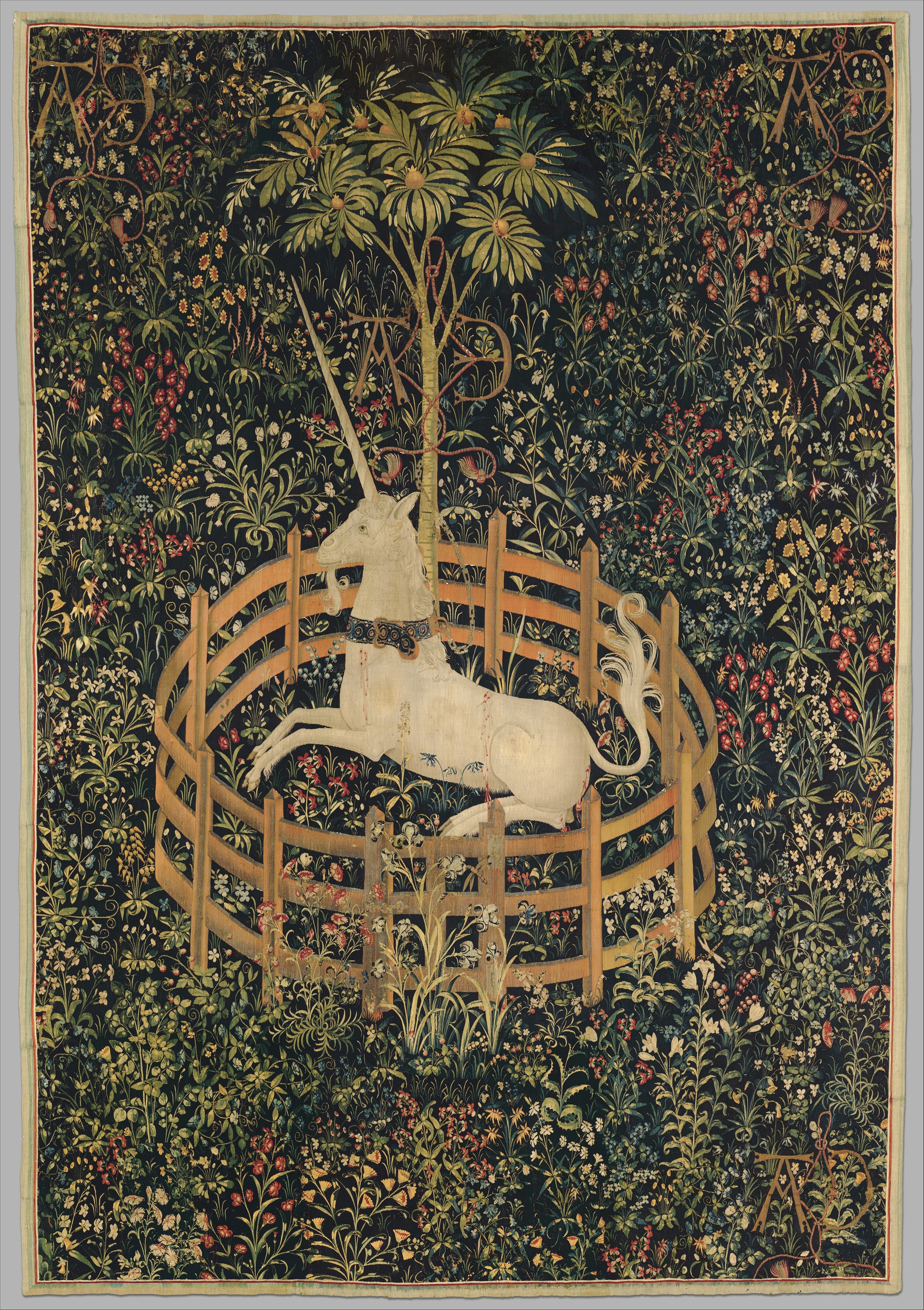
There’s an early allusion to its healing powers woven into a fabulous early 16th. century French tapestry, The Unicorn in Captivity, now displayed in the Met in New York, where bistort sits against the right foreleg of the wounded mythical beast.

In a culinary context, it’s the key ingredient in the classic traditional Easter-ledge pudding of Cumbria, Lancashire and Yorkshire. Recipes vary, depending on location, but all require its leaves, harvested young at Easter-time, usually boiled with nettle tops, oat-meal and chopped onions, bound together with egg, made into patties and fried. Every spring the World Easter-ledge Pudding Championship is held at Mytholmroyd near Hebden Bridge in Calderdale.


Wednesday, March 26, 2014

Toothwort and toothache: a botanical old wive's tale.

Thursday's Guardian Country Diary concerns toothwort Lathraea squamaria, the parasitic flowering plant that depends entirely on hazel trees for its nutrition, since it is a plant without chlorophyll.


There is no hint of the plant's presence until March, when its scaly flowering shoots, which look quite reptilian and menacing, erupt through the soil.


They're attached to hazel roots and some, like those in the picture above, can appear in grass some distance away from the trees, revealing how far hazel roots extend underground. 


After a brief flowering period, during which they attract bumblebee pollinators, the flowering  shoots soon set seeds and then by early summer they wither away.


Almost every wild flower book that I've ever read explains that the plant's common name arose from the appearance of  its flowers, which resemble rows of discoloured teeth, and then go on to suggest that it acquired its name via the Doctrine of Signatures. This fanciful notion, which dates back to Roman times and the physician Dioscorides, claimed that plants to look like a part of the human body will cure that organ's ailments. So with it's toothy appearance, toothwort must surely be a cure for toothache....... 


...... but there seems to be no evidence that anyone ever tried to use the plant in that capacity. In their scholarly work Medicinal Plants in Folk Tradition (2004) David E.Allen and Gabrielle Hatfield could only find one slight reference, in Gerard's Herbal, to a medicinal use for the plant and that was to treat lung complaints. It seems that the use of toothwort in folk medicine for dental self-medication is one of those plausible myths that never dies but is endlessly repeated.

The Doctrine of Signatures owes much to the German botanist Phillipus Aureolus Theophrastus Bombastus von Hohenheim (1493-1541) who, unsurprisingly, is best known by his shortened, Latinised name: Paracelsus. He refined the concept and it was later taken to absurd lengths by the English herbalist William Coles (1626-62), whose book Adam in Eden, or Nature's Paradise, woven together religion and botany, claiming that God created plants to look like body organs in order to signify their medicinal virtues to humans, extending the Doctrine far beyond the limits of credulity for all but the most devout.


Thursday, May 30, 2013

The Wisdom of Solomon and a Misogynist Joke (?!) in a 16th. century herbal


We recently found this large patch of Solomon's Seal Polygonatum multiflorum growing amongst bluebells in the wild flower meadows near Hawthorn Dene on the Durham coast. It's a native species but certainly a garden escape along this coast.


There are various stories about how it earned its common name but the most likely seem to relate to the disc-shaped scars on the surface of its rhizomes or to the pattern of vascular bundles in the rhizome that are revealed if you cut it into thin slices (for herbal use - see below), which supposedly look like royal seals with Hebrew writing. How this is linked to Solomon, he of 700 wives and 300 concubines, remains a mystery. John Gerard quotes the story in his Herbal of 1597. 

The reason Gerard included it in his herbal was that the plant has a history of use in medicine that dates back to the days of the ancient Greek physician Dioscorides, especially for treating bruises and broken bones. Gerard says that "the root of Solomons seale stamped while it is fresh and greene, and applied, taketh away in one night, or two at the most, any bruise, blacke or blew spots gotten by falls or womens wilfulnesse, in stumbling upon their hasty husbands fists, or such like", which is a quip that no doubt might have amused his renaissance readers (and maybe multi-wifed Solomon) but  which most would find deplorable in our thankfully more enlightened times. 

He also mentions that Matthiolus, the Italian 16th. century physician, "teacheth that a water drawn out of the roots, wherewith the women of Italy use to scour their faces from sunne-burning, freckles, morphew, and any such deformities of the skin" which, - who knows? - might yet be revived by the cosmetics industry.

Monday, July 27, 2009

A Miracle of 16th. century Medicine


The herbal uses of many plants, like the two woundworts shown here, are preserved in their common names. Hedge woundwort Stachys sylvatica (bottom photo), with spikes of purple and white-blotched, hooded flowers is common along woodland edges and is most easily recognised by the appalling stench of its crushed leaves. Marsh woundwort Stachys palustris (top photo), with less pongy leaves covered with soft greyish hairs and with pink flowers, is restricted to damper habitats. Confusingly, the two species tend to form hybrids with intermediate chacters when they occur within bee-foraging proximity. According to the 16th. century herbalist John Gerard, marsh woundwort (or all-heale, as he also called it) has miraculous powers. In his famous Herbal of 1597 Gerard says that marsh woundwort first came to his attention when he met a labourer who had cut his leg to the bone with a scythe. Gerard recounts how the victim crawled to a patch of woundwort and “tied a great quantitie of it unto the wound with a piece of shirt”, whereupon the pain and bleeding ceased and he could resume work. Within seven days, he claimed, the wound was healed. Impressed with the labourer’s experience, Gerard went on to test the efficacy of woundwort on two of his own patients. The first had been run through with a sword, puncturing his lung, but Gerard claimed to have “perfectly cured him in a very short time”, using the labourer’s method with the addition of some turpentine, oil of roses and “a quart of good claret wine”. Even more improbably, he then claimed to have successfully treated an attempted suicide who had cut his own throat and stabbed himself in the chest and abdomen, restoring him to good health within twenty days. Far-fetched for sure, but back in Gerard’s day the tall stories in his Herbal – and the wild plants of the hedgerow – were the best medical resources available. Interestingly, he describes marsh woundwort as growing “in the medowes by Lambeth neere London”. I wonder if there’s a marsh woundwort plant growing anywhere within the Borough of Lambeth today?