Showing posts with label Aphids. Show all posts

Thursday, June 12, 2025

Ants tending a herd of aphids

 For the second year in succession we have ants nesting in one of the garden waste recycling bins, which happens to be close to a cardoon plant that's hosting numerous small colonies of black bean aphids. These attract the ants because they secrete sweet, energy rich honeydew, the waste product of the sap they siphon from the cardoon. 


The ants caress the aphids with their antennae, which stimulates the aphids to produce droplets of honeydew that the ants drink and carry back to the nest in their distended abdominal segments.

In the image above and in the final image below you can see a feeding ant's swollen abdomen, rendered almost transparent where the pigmented plates of the abdominal segments have been stretched apart.


Wednesday, August 9, 2023

Blue tits and long-tailed tits feeding on aphids

 Blue tits and long-tailed tits often seem hyperactive, constantly searching for food. A moth larva would be a good meal, but they also eat much smaller prey, picking off aphids that infest plants. The blue tit below was eating aphids from the stalks of a hogweed umbel. The long-tailed tits, pictured futher down this post, were feeding on the woolly aphids that cover the trunk and stem of a crab apple tree in our garden.


Individually, tiny morsels of food, but since the aphids feed on plant sap, rich in sugars, they must provide a significant energy reward.


Saturday, May 20, 2023

Ladybird defenders of my blackcurrant crop

 Every year in late spring the blackcurrant bushes in my garden are plagued by aphids that multiply unnoticed under the leaves, until they began to curl. That's usually the time that ladybirds, those useful aphid predators, begin to congregate on the bushes. It's probably the ladybird larvae that are the most effective predators, rather than the adults, so it will be a while before they appear, but these three ladybird species were feeding on the bushes yesterday. They are all very small, about half the size of the most common, most familiar 6-spot species.


2-spot ladybird


10-spot ladybird


14-spot ladybird

Saturday, July 9, 2016

Ants 'farming' aphids


We found these ants 'farming' aphids on a ragwort plant when we were out walking in the Tyne valley near Wylam this morning.


The ants gently stroke the aphids with their antennae, to encourage them to excrete honeydew that the sweet-toothed ants collect.


I suspect the aphids are ragwort aphids Aphis jacobaeae, but I need to get that confirmed by someone on iSpot. Also need an ID for the ant species.


Saturday, October 4, 2014

Greenfly guzzler


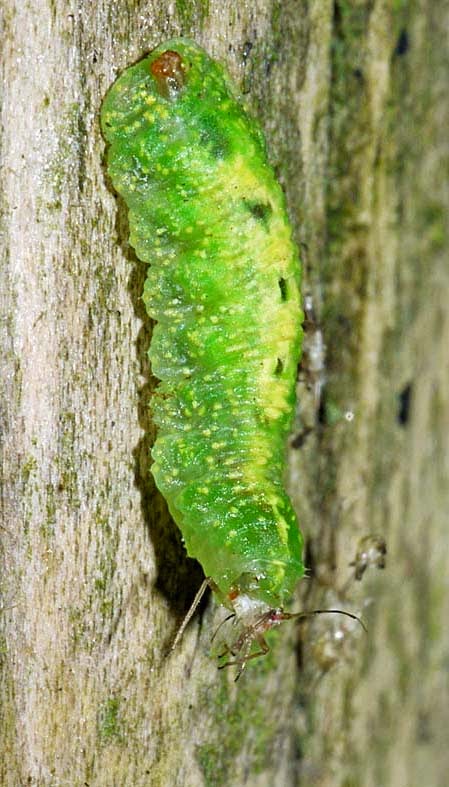
I found this large hoverfly larva in Teesdale yesterday and watched it feeding on aphids. A gruesome spectacle - it caught them tail-first and they were still waving their legs and antennae as they disappeared into the predator's digestive tract.


Saturday, August 17, 2013

Sycamore Aphids

Recently there has been a lively exchange of comments in the Guardian on a piece by George Monbiot that extols the virtues of native trees because they support insect biodiversity (birch hosts no less that 266 different invertebrates, for example) and deplores the tendency of local authorities to plant non-native trees that are of relatively little value to our native fauna.

One of the most frequently cited examples of a non-native tree with a very limited insect fauna is sycamore, which hosts a paltry 15 species. It's a long-established non-native species with a  documented history here that dates back to the 16th. century, but since then only a small number of our insects have adapted to it. But what it lacks in biodiversity, it certainly makes up for in the sheer quantity of one particular insect that lives on its leaves - the sycamore aphid.


Over the summer these little insects multiply in vast numbers under its leaves - and they produce a lot of honeydew, so woe betide anyone who parks a car under the tree; it will be as sticky as a toffee apple if it's left there for long. 

The positive aspect of this sticky secretion is that the mildew that grows on the sap that the aphids excrete is an important food source for the orange ladybird Halyzia sedecimguttata, whose distribution is linked to that of sycamore.


All these aphids are certainly of real value to some of our native birds - I've often watched blackcaps and blue tits picking them off the leaves. 


One of the most striking features of the sycamore aphid is the way in which the individuals space themselves evenly under the leaf. the spacing is such that they are just close enough together to touch each other with their long antennae, so if an individual in one part of the leaf is attacked the alarm spreads from aphid to aphid in a wave of antennae-waving across the whole leaf.

The annual sycamore aphid population explosion has just about ground to a halt now and soon they'll fly to sites on twigs and buds where they'll lay overwintering eggs. They hatch in spring just as the buds burst, with perfect timing to plug their stylets into the fresh young foliage as it emerges - and that's the time when you'll often see blue tits and great tits picking the aphids off the bud scales.


Thursday, July 18, 2013

Aphids living on borrowed time...........


The tops of the broad beans in our garden are infested with aphids that are breeding at a phenomenal rate in this hot weather.


The wingless forms stay more or less where they were born, sucking sap from the plant, while the winged forms disperse from plant to plant. There's a simple way to control infestations like this now that the beans have finished flowering - just break off the aphid-infested tops - but natural predators are also doing their bit.


If you take a close look at the top aphid in this group you'll see a white cylindrical object next to it: that's a hoverfly egg, one of many that have been laid amongst the aphid colonies. As soon as they hatch the hoverfly larvae have almost unlimited food within easy crawling distance. It only those aphids knew the horror that is about to be unleashed .....

You can see what happens next by clicking here.


Thursday, July 11, 2013

Ants and Aphids

This black ant, with its lethal-looking jaws outstretched, isn't about to eat the aphid - it's farming it.


This is a mutually beneficial arrangement. The ants 'milk' their herd of aphids, collecting the sweet honeydew that the aphids excrete as they feed on plants sap, and in return the aphids are protected by their ferocious minders. The ants stroke the aphids with their antennae to encourage them to produce a continuous supply of honeydew.


Apparently the relationship even extends to ants picking up young aphids in their jaws and carrying them to uninfested parts of the plant, where the aphids rapidly breed and establish a new 'herd'.

Saturday, June 25, 2011

Gruesome Greenfly Pictures...

If your garden is as plagued by greenfly as mine is, then this will be a welcome sight - a hoverfly larva tucking into an aphid. It's interesting to watch one of these voracious larvae crawl into a group of aphids. Once the aphids are attacked they emit alarm pheromones and the whole colony instantly becomes restless and begins to drop off the plant in a desperate attempt to escape........ but some are not quick enough....

The hoverfly larvae swallow the aphids tail-first....

... or head-first; they are not choosy. Hoverflies are assets in any garden. Many are pollen feeders, so a good supply of pollen-rich flowers (the daisy family is always a good bet) will ensure that they breed in a garden and produce plenty of these useful predators.

Recently the alarm pheromone that aphids produce and makes them drop off plants when they are threatened has been genetically engineered into wheat crop plants, in an attempt to protect the plants from aphid attack.