Sunday, January 29, 2023

Wren

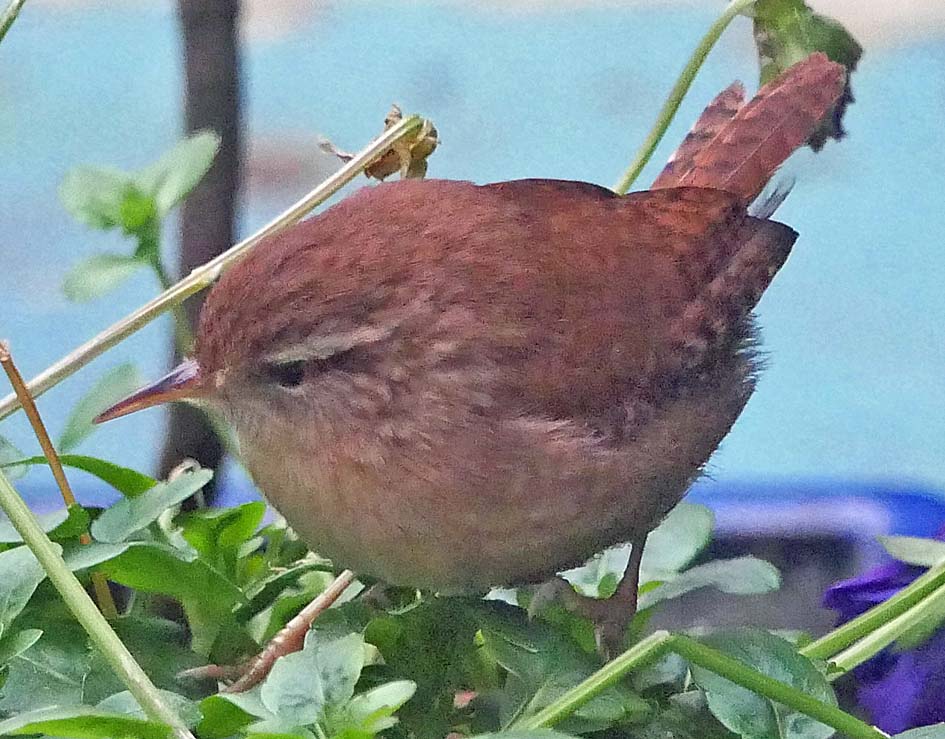
 There are four pots of winter-flowering violas on a table just outside our living room window. Most days, this wren visits, searching through the plants for something edible. As far as I can tell, it spends most of its time picking tiny aphids from the plants, using that curved, pointed bill with forensic dexterity. 


Thursday, January 26, 2023

Some lovely liverworts

 This is probably the best time of year to look for liverworts, when they are actively producing new shoots and before taller vegetation grows up around them and often hides them in spring. Here are a few that I've found recently.


Great scented liverwort aka snakewort Conocephalum conicum, growing on a wet, shady retaining wall. This species has a powerful, agreeable scent when you crush it, which to me smells like Duraglit metal polish with citrus undertones. Prominent air pores and the polygonal pattern on the surface, give it a scaly, reptilian appearance.


Pellia endiviifolia, Endive Pellia, a thalloid liverwort whose new growth in autumn and winter consists of irregular, frilly extensions from the end of each flat thallus lobe. I also found this one on a permanently wet, shady retaining wall.


Plagiochila asplenoides, Greater Featherwort, a leafy liverwort that I found growing on a wet, shady bank in open deciduous woodland in Teesdale. One of the commonest leafy liverworts in woodland.


Plagiochila porelloides, Lesser Featherwort. A smaller, more compact Plagiochila species with darker green leaves. I found this one growing in crevices in a wet, shady retaining wall. 


Metzgeria falcata, Forked veilwort, a small thalloid liverwort that I found growing on the bark of an old beech tree, at the point where rain trickles down the trunk. The thin, flat thallus forks near the tip. 


Tuesday, January 24, 2023

Crows versus Magpies


Magpies have nested at the bottom of our garden annually for about twenty years. Until last year they returned every spring to the massive heap of sticks in the centre of an old hawthorn, which was well hidden. Last year they built a new one in a fast-growing Norway maple, about ten feet higher than their previous nest and very exposed to potential predators. A pair of magpies have been standing guard over the nest since late December, but now it looks as though they are being evicted by carrion crows.


A single crow turned up yesterday morning, pecking at twigs in the nest and evidently rearranging them for its own comfort. It provoked a furious and very noisy reaction from the magpies.


The magpies made a lot of fuss but never approached within pecking range of the crow's beak.


Then the crow started calling and within a couple of minutes its mate turned up, provoking more fury from the magpies.


So it seems that the pair of crows have taken over. The magpies are still loitering, but the crows came back this morning. It will be interesting to see how this conflict develops, and who will lay eggs in the nest.