Thursday, November 20, 2014

Fine fungi

After a bit of a slow start here, the crop of interesting autumn fungi is beginning to improve, no doubt because of recent rain. We found these three species in the Tyne valley near Wylam today. 


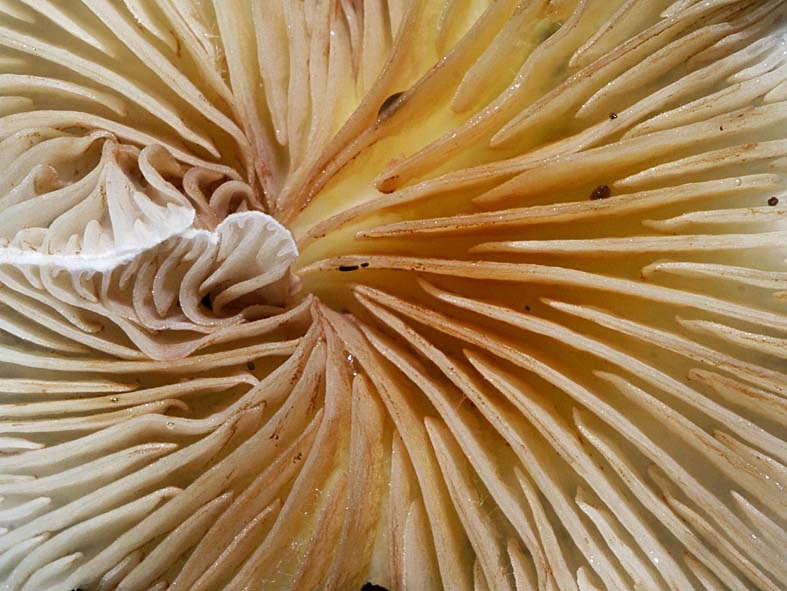
Variable oysterling Crepidotus variabilis, growing on dead gorse stem


Beech woodwort Hypoxylon fragiforme, looking very like Christmas baubles. Growing on a fallen tree trunk.


Purple jellydisc Ascocoryne sarcoides, looking like something that belongs on a butcher's slab. Growing on a fallen tree trunk.


A luxuriance of lichens


Today's Guardian Country Diary is about the way in which the right combination of habitat factors - light, humidity and shelter from the wind - can coincide to provide conditions that favour the luxuriant growth of lichens on trees.

All of these lichen species were festooning just three larch trees in a plantation in Hamsterley forest. The trees were at close commercial spacing in neat rows, but only three on the outside row, in a dip in the ground, carried a dense population of lichens. The next row in, about five feet behind, had a few but the row beyond those, that would have been too shaded in summer when the larches carried needles, had none at all.


This beauty, also shown in the four photos immediately below, is (I think) Usnea subfloridana. Its delicate branches don't respond well to being buffeted by gales but in this sheltered location it hung like beards from the trees.


I've yet to identify the following species but they too covered the lower branches of the larches.


Ramalina farinaceae (?)


Hypogymnia physoides (?)


Evernia prunastri (?)


Cetraria chlorophylla (?)


Hypogymnia physoides (?)


Cladonia fimbriata (?) growing on an old larch cone


Monday, November 17, 2014

Horsetail

 This strange plant is the Dutch rush Equisetum hyemale which isn't a rush at all - it's a member of that strange division of the plant kingdom known as horsetails. We found it yesterday, growing in a ditch beside the disused railway line that now forms the Derwent Walk Country Park in Gateshead.


To some these flowerless stems must seem like the dullest plants on the planet but they are living fossils, descendants of giant ancestors that once formed a major component of the flora in the Carboniferous swamps, 300 million years ago. The Dutch rushes that we found yesterday grew to about 60 cm. tall but their ancestors grew to tree-sized proportions, some 30 metres tall, and are commonly found as fossils in coal measures. At that time the amphibians were the dominant form of land vertebrate life.


Compression fossils of horsetail stems, like these that we found on the beach at Dawdon on the Durham coast, are easily identifiable as they show the same pattern of grooves and ridges found in present-day horsetails. These stems were about ten times greater in diameter than the Dutch rush stems in the picture above, so if you were to scale up its height in direct proportion this particular fossil ancestor might have been roughly the height of a double-decker bus when it was alive.


This is the distinctive cone of Dutch rush, with that little spike at the top. When it's ripe in spring .....


.... each of those hexagonal sections will separate and elongate on a short stalk, .... like .....


...... these, which belong to the common field horsetail Equisetum arvense. The spores that are released from those yellow sporangia under the hexagons are unique to horsetails ....


.... because each has four long arms called elaters which are curled around the spore during development but are deployed when it dries out and is released, increasing the aerial buoyancy of the wind-dispersed spore.