Monday, July 6, 2009

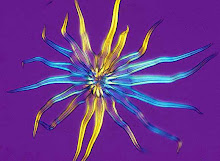
An Exquisite Seed Dispenser


This elegant little object is the glassy seed capsule of a common and easily overlooked wild flower: mouse-ear chickweed Cerastium fontanum. You can find an excellent photograph of the plant in bloom over at http://northumberlandnaturalist.blogspot.com/2009/07/cottonshope-burn.html
After the flowers fade they're followed by these exquisitely formed seed containers, each about a centimetre long at maturity. This capsule has shed all of its seeds except one, which you can just make out inside the vase-shaped neck. Those teeth that surround the opening bend back to allow the seeds to be shaken out in dry weather and close up when it’s wet – a mechanism that also operates in white campion seed capsules. You can make it go through the motions by putting it in a sealed container with moist paper towel in the bottom, then bringing it out into dry air.

Drinker lays an egg


I didn’t realise until I’d taken several pictures of this drinker moth that I’d actually disturbed it in the act of laying eggs. In one photograph you can see three eggs that it’s laid on a cock’sfoot grass leaf, in the other you can see it actually laying one of its grey and white oval eggs. You can find some photos of the caterpillar, which is reputed to drink dew, at http://ukmoths.org.uk/search.php?entry=drinker

Sunday, July 5, 2009

Scratch and Sniff Botany


The Weardale Way footpath that runs from St.John’s Chapel to Cowshill passes through some delightful riverside locations, including this bridge over the river Wear at West Blackdene (bottom photo), with an interesting riverbank flora along the way. Meadowsweet Filipendula ulmaria is in full bloom now. I can never pass this plant without crushing a leaf between finger and thumb – the sap has the distinctive antiseptic aroma of a healing ointment called Germolene (can you still get it?), which was the standard treatment for grazed knees when I was a kid. I probably reeked of the stuff through my formative tree-climbing years. The scent is strongest in the young foliage of meadowsweet, particularly in spring. The other wonderful aroma that we encountered along this walk was the fragrance of fragrant orchid Gymnadenia conopsea. Most orchids lack a distinctive scent – they put all of their energies into elaborate flower structures instead – but this is a species that you could identify with your eyes shut after just one sniff. The scent seems to attract long-tongued bees and butterflies that extract nectar from those long nectar spurs behind the flower. These were particularly fine specimens – probably the tallest that I’ve ever encountered.